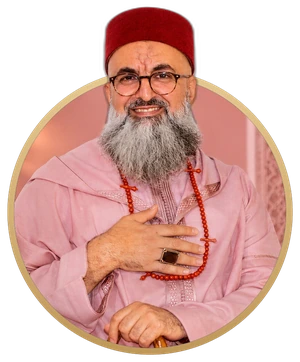
The Shaykh
His ancestry, from the Prophet ﷺ to the Idrisids of the Rif
The most illustrious of his forefathers is, of course, the master of the two worlds, the chief of the children of Adam, the bearer of the banner of praise, our master Muhammad ﷺ, upon him be Allah's peace and blessings, and upon his family and companions.
Among his children was our illustrious mother, the pure, pious and virtuous Sayyida Fatima al-Zahra, whom her father ﷺ named among the four best women of Paradise, alongside Sayyida Maryam, Sayyida Asiya and Sayyida Khadija, may Allah have mercy on them. Concerning her, the Prophet ﷺ said:
- “Fatima is a part of me. Whoever angers her angers me.”
- “Allah is angered by what angers you, and He is pleased by what pleases you.”
She married Sayiduna ‘Ali Ibn Abi Talib, the Prophet's cousin, the child who was born inside the Kaaba, who never worshipped an idol, the first child to embrace Islam, and who became a major figure of the first Muslim community. Concerning him, the Prophet ﷺ said:
- “Are you not pleased to be to me what Aaron was to Moses, except that there will be no prophet after me?”
- “I am the city of knowledge and ‘Ali is its gate.”
- “Whoever I am his master, ‘Ali is his master. O Allah, support those who support ‘Ali, and be the enemy of those who become the enemies of ‘Ali.”
After the assassination of the caliph ‘Uthman Ibn ‘Affan by a group of rebels, Sayiduna ‘Ali Ibn Abi Talib was chosen as the fourth caliph and received the allegiance of a large part of the Muslims, with the exception of the companion Mu‘awiya Ibn Abi Sufyan, then governor of Syria, Palestine and Egypt. A close relative of ‘Uthman, he refused to pledge allegiance to Sayiduna ‘Ali as long as those responsible for ‘Uthman's murder had not been brought to justice. This disagreement led to several major conflicts, up to the assassination of Sayiduna ‘Ali Ibn Abi Talib in his mosque in Kufa in 661.
He left several children, among them the masters of the youth of Paradise, Sayiduna al-Hassan and Sayiduna al-Hussein. Their names were chosen by the Prophet ﷺ himself, who said of them:
- “Whoever loves al-Hassan and al-Hussein loves me, and whoever hates them hates me.”
- “These are my grandsons, the sons of my daughter. O Lord, I love them. Love them, and love those who love them.”
The forefather of Sidi Mohamed Faouzi al-Karkari, Sayiduna al-Hassan Ibn ‘Ali (624-670), was also the subject of a prophecy by his noble grandfather ﷺ which came true. He had said of him:
- “This son of mine is a master (sayyid), and through him Allah will reconcile two great groups of Muslims.”
This is what happened in the year 40 of the Hijra. After the tragic assassination of Sayiduna ‘Ali Ibn Abi Talib, Sayiduna al-Hassan Ibn ‘Ali was recognised as the fifth caliph of the Muslims. However, the companion Mu’awiya Ibn Abi Sufyan, who still governed the regions of Syria, Palestine and Egypt, again refused to pledge allegiance to him.
Concerned to preserve the unity of the Muslims, and fearing that a war with Mu’awiya would bring bloodshed within their ranks, Sayiduna al-Hassan chose to give up power six months after his accession to the caliphate, in favour of Mu’awiya. That year would go down in history as the “year of unity”, marking the beginning of the rule of the Umayyad dynasty.
Following this agreement, a group of Muslim dissidents declared his excommunication from the Muslim community, considering that giving up the caliphate was an act of disbelief. Sayiduna al-Hassan escaped several assassination attempts, but was finally poisoned and died from the poison.
Among his many children was the great scholar Sayiduna al-Hassan al-Muthanna (661-715). He was present at the infamous battle of Karbala (680), alongside his uncle Sayiduna al-Hussein Ibn ‘Ali, a battle in which al-Hussein's family was massacred and he himself was beheaded by the Umayyads. Al-Hassan al-Muthanna was then only nineteen. He was wounded and captured, but managed to survive. He later married his cousin Fatima bint al-Hussein Ibn ‘Ali, one of the survivors of that battle. Several children were born of this union, among them the forefather of Shaykh Mohamed Faouzi al-Karkari, Sayiduna Abdallah al-Kamil.
The latter played a very important role in his time. He was a man known for his piety, anxious to preserve the heritage of the Ahl al-Bayt. He was nicknamed “al-Kamil”, that is “the Complete”, because he was a descendant of al-Hassan Ibn ‘Ali through his father and of al-Hussein Ibn ‘Ali through his mother, thus uniting the two noble sharifian lines.
Living under the Umayyad dynasty, he was a major political figure. He was the leader of the descendants of al-Hassan Ibn ‘Ali in Medina, at a time when many wished to see the family of the Prophet ﷺ lead the Muslims. To overthrow the Umayyads, Abdallah al-Kamil made a pact with many groups of Muslims, among them the descendants of the Prophet's uncle al-Abbas, known as the Abbasids. This pact provided that when the Umayyads fell, power would go to his son Mohamed Nafs-zakiya, to whom all pledged allegiance.
Unfortunately, once they had managed to overthrow the Umayyads, the Abbasids went back on their pledges and seized power. They then turned against the descendants of the Prophet ﷺ, whom they now regarded as dangerous rivals in the quest for power. The Abbasid caliph al-Mansur asked Sayiduna Abdallah al-Kamil to pledge allegiance to him; he refused and was imprisoned until his death.
His family and children, among them Mohamed Nafs-zakiya, Ibrahim, Sulayman and Moulay Idriss, were harshly repressed. They then led several revolts against the Abbasids, the best known being the battle of Fakhkh in 786. This revolt would become, in a way, a second massacre of the Prophet's descendants after that of Karbala.
Historians estimate that between one hundred and four hundred members of the Prophet's family ﷺ were killed that day. Several people nevertheless managed to escape, notably the noble and pious Moulay Idriss, forefather of Shaykh Mohamed Faouzi al-Karkari, who was then hunted by the caliph, who wished to eliminate any threat to his power.
An Idrisid ancestry
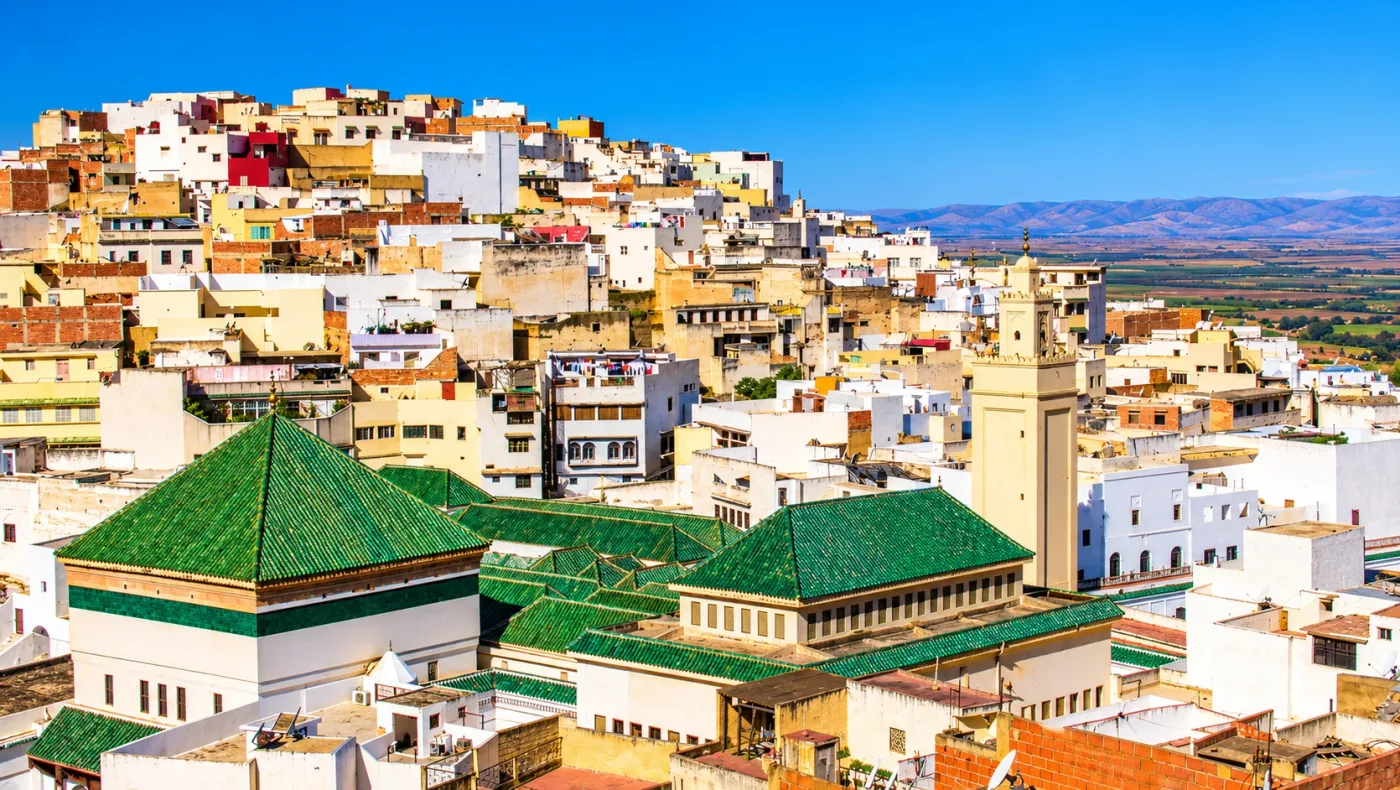
Faced with repression by the Abbasid caliphate, Moulay Idriss left the Hijaz and began a long exile. He first went to Egypt, but pursuit by the Abbasid authorities forced him to flee to Ifriqiya (present-day Tunisia), then to the far western end of the Muslim world. He found refuge among the Amazigh tribes of present-day Morocco, more precisely in the ancient Roman city of Volubilis, in the Meknes region.
These tribes gave him a favourable welcome and honoured him, out of the deep respect they held for the descendants of the Prophet Muhammad ﷺ. They gathered around him and recognised his authority. He then married Lalla Kenza, of the Awraba tribe, and this union marked the emergence of the Idrisid dynasty, the first Muslim dynasty of Morocco.
It was through this exile of Moulay Idriss that, over the centuries, the descendants and heirs of the Prophet ﷺ would settle North Africa in great numbers. However, the Abbasid caliph Harun ar-Rashid, fearing the emergence of a rival power that might weaken his authority, pursued his aim of eliminating Moulay Idriss. Knowing that he was under the protection of the Amazigh tribes, the caliph therefore commissioned an infiltrated agent who posed as a fugitive and who finally assassinated him in the year 790.
In Baghdad, the Abbasid caliph considered that he had put an end to the Idrisid threat. He thought he had extinguished this line, but he did not know that at the time of Moulay Idriss's assassination, his wife was already pregnant with his heir. Thus, a few months later, was born the son of Moulay Idriss and heir to the Idrisid throne, Moulay Idriss II, known as “al-Azhar”.
Raised in the greatest secrecy, Moulay Idriss al-Azhar came to the throne at the age of eleven. Renowned for his piety, knowledge and intelligence, he played a central role in organising the territory and founded the city of Fez at the beginning of the ninth century. He was in fact its architect, since it was he who conceived the medina of Fez with its countless lanes that mingle and cross. His aim was to throw off course anyone who might attempt to take his life.
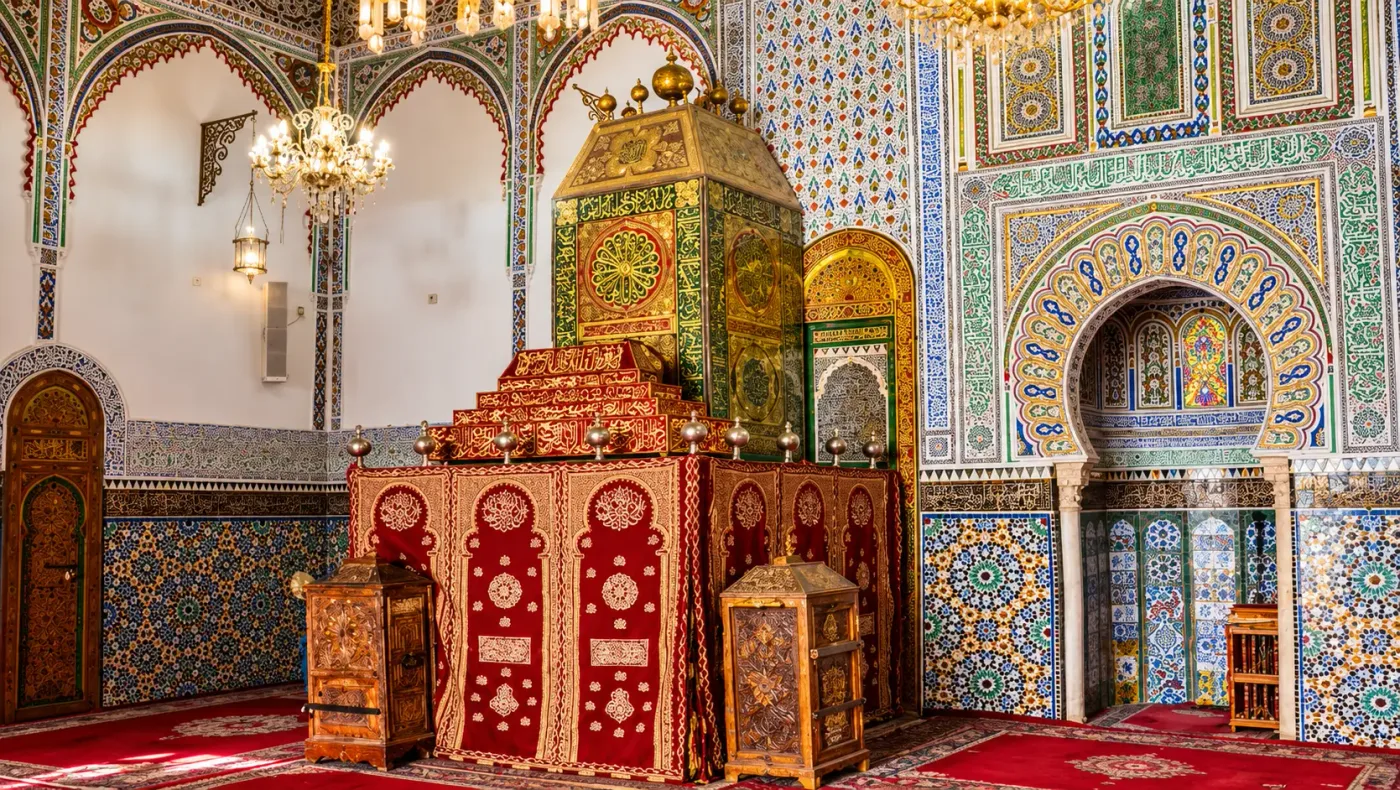
Moulay Idriss al-Azhar then consolidated his father's kingdom through alliances with various Amazigh tribes. After his death in 828, he left a vast unified territory and numerous descendants, some fifteen children, among them twelve sons.
His son Mohamed Ibn Idriss succeeded him, but his accession to power was soon followed by the first internal tensions with his brothers. They too were seeking power, and to avoid conflict Mohamed Ibn Idriss decided to follow the advice of his grandmother Lalla Kenza. He divided his kingdom into eleven provinces, which were entrusted to his brothers as governors.
Among them was the forefather of Sidi Mohamed Faouzi al-Karkari, Moulay al-Qassim Ibn Idriss, who left Fez to settle in the western Rif, a region he administered from Tangier to Larache and as far as the surroundings of present-day al-Hoceima. In a context of growing internal tensions, a fratricidal war eventually broke out between Mohamed Ibn Idriss and his brothers. Moulay al-Qassim, known for his asceticism and piety, refused to take part in the conflict despite the orders of his brother, the ruler of the Idrisids, Mohamed Ibn Idriss. Moulay al-Qassim then decided to withdraw from power around 840 and settled in a ribat in the region of Asilah, where he would end his days in 860 in devotion and asceticism.
His son Mohamed Ibn al-Qassim Ibn Idriss, nicknamed Mohamed al-Bakmani, immediately succeeded his father, in a context of gradual weakening of the central power in Fez. He nevertheless managed to maintain Idrisid authority in the western Rif. He had several children, among them the forefather of Shaykh Mohamed Faouzi al-Karkari, Ahmad Ibn Mohamed, known as Ahmad Belkarti.
Nicknamed “Janun”, which means “the moon” in Amazigh, he shared control of the northern and western regions of Morocco with his brothers Ibrahim and al-Qassim Ibn Mohamed Ibn al-Qassim Ibn Idriss, in a context marked by increasingly frequent Fatimid and Umayyad incursions. He died around the year 920 and left several children, among them Moulay ‘Iyyad, a local governor in the region of Ksar al-Kebir. Faced with ever stronger external threats, he helped maintain Idrisid power, but he eventually withdrew to the mountainous areas of the Rif.
Moulay ‘Iyyad died around 960, leaving among his children the forefather of Shaykh Mohamed Faouzi al-Karkari, Moulay Salem Ibn ‘Iyyad, who would witness the gradual fall of the Idrisid dynasty. Moulay Salem is often cited as one of the major ancestors of many sharifs of northern Morocco, such as Sidi ‘Abd as-Salam Ibn Mashish. He was one of the turning points between the princely Idrisids, involved in local politics and power games, and the rural Idrisids, who abandoned politics to blend into the mountains of the Rif.
Moulay Salem Ibn ‘Iyyad turned to spirituality and religious teaching among the Jbala tribes, and he had numerous descendants, figures known and recognised for their piety and wisdom.
Between the eleventh and fifteenth centuries, the blessed lineage of Shaykh Mohamed Faouzi al-Karkari continued after Moulay Salem Ibn ‘Iyyad, whose son was Moulay ‘Imrane, whose son was Moulay Jaber, whose son was Moulay ‘Alal, whose son was Moulay ‘Abd al-‘Aziz, whose son was Moulay Me’zouz, whose son was Moulay ‘Azouz, whose son was Moulay Moussa, whose son was Moulay ‘Issa, whose son was Moulay Mess’oud, whose son was Moulay Mimoun Abu Wakil, also called Boukil Ibn Mess’oud al-Idrissi, founder of the Bani Wakil tribe. The name of Sidi Mohamed Ibn al-Qaddur al-Wakili, also called “al-Boukili”, comes from him.
After him, the Bani Wakil tribe divided into four groups of Idrisid sharifs: the Ankad group, the Trifa group, the Bani Wakil al-Mawakhikh group, which take their name from the forefather of Sidi Mohamed Faouzi al-Karkari and son of Moulay Mimoun Abu Wakil, Sidi Mkhoukh, and the Ouled Sidi Moussa group.
Sidi Mimoun Abu Wakil was born in the year 442 of the Hijra, corresponding to 1050 CE, in the Middle Atlas region near the present-day town of Tadla, where his forefather Moulay ‘Imrane Ibn Salem had emigrated. He grew up in an age of tribal wars and unrest pitting the Fatimids against the Amazigh chief Moussa Ibn Abi al-Afia al-Miknassi. The latter governed central Morocco until the advent of Sultan Youssef Ibn Tachfine, founder of the capital Marrakech and father of the Almoravid dynasty.
Around 1096, Sidi Mimoun Abu Wakil and his brother ‘Abd ar-Rahman set out to perform the pilgrimage (Hajj). There they met the Imam Abu Hamid al-Ghazali, who became their Shaykh. For several years they remained in his company and benefited from his teachings, until the death of Sidi ‘Abd ar-Rahman in Medina. Sidi Mimoun Abu Wakil returned to Morocco at the time of the first uprisings of the Almohads, led by Mohamed Ibn Tumert, against Almoravid rule.
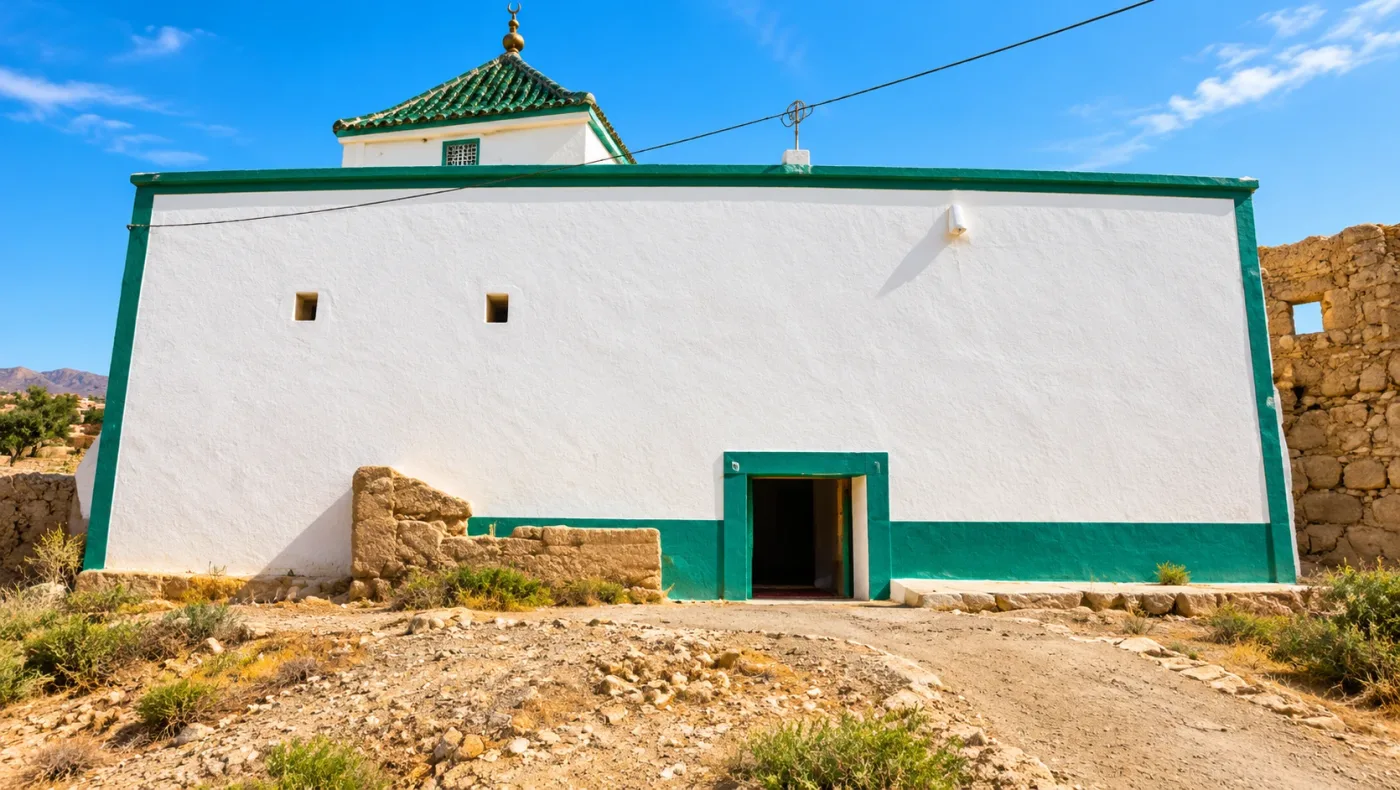
Sidi Mimoun married his cousin, with whom he had five children, and after his death he was buried near Errachidia, in the small village of Zaouiat Sidi Boukil, where his mausoleum stands. It should be noted here that the family trees of Shaykh Sidi Mohamed Faouzi al-Karkari and of his wife Lalla Najat meet at Sidi Mimoun.
Among his children was Sidi ‘Issa Ibn Mimoun, forefather of Sidi Mohamed Faouzi al-Karkari, who is known and mentioned in several works under the name of Sidi Makhoukh. He grew up in the village of Ighejd in the province of Errachidia in the eleventh century, then settled near Oujda in the town of El Aïoun Sidi Mellouk. It is there that he died, having left his mark on local memory. A mausoleum was built over his grave and many public buildings in the town bear his name today.
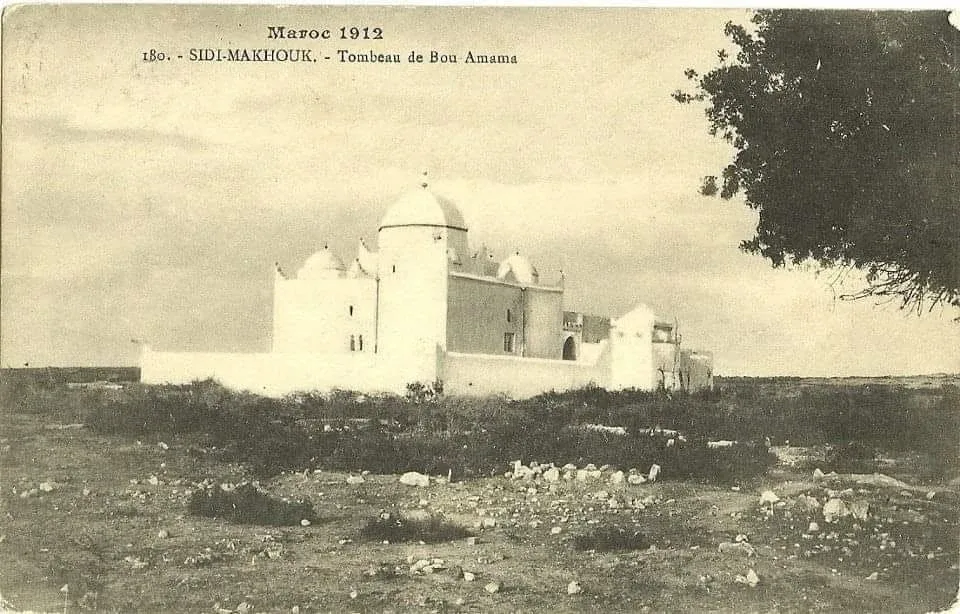
He had several children, among them Sidi ‘Ali Ibn ‘Issa, whose son was Moulay Mohamed, whose son was Moulay al-Hassan, whose son was Moulay ‘Issa, whose son was Moulay Yahya, whose son was Moulay Zakariya, whose son was Moulay ‘Abd al-‘Aziz, whose son was Moulay Abdallah, whose son was Moulay ‘Abd ar-Rahman, whose son was Moulay Yahya, whose son was Moulay Ibn Zayd, whose son was Moulay Ibrahim, whose son was Moulay Ya’qub, whose son was Moulay ‘Ali, whose son was Moulay Moussa, whose son was Moulay ‘Ali, on whom we shall pause for a moment.
Indeed, Sidi ‘Ali Ibn Moussa was an educator Shaykh who lived in the sixteenth century under the Saadian dynasty. He is notably known for having taken part in one of the most famous battles in Moroccan history: the celebrated Battle of the Three Kings. It took place in 1578 and pitted the Saadian Sultan ‘Abd al-Malik, accompanied by his brother, the future Sultan Ahmad al-Mansur adh-Dhahabi, against King Sebastian I of Portugal, supported by the former deposed sultan al-Moutawakil.
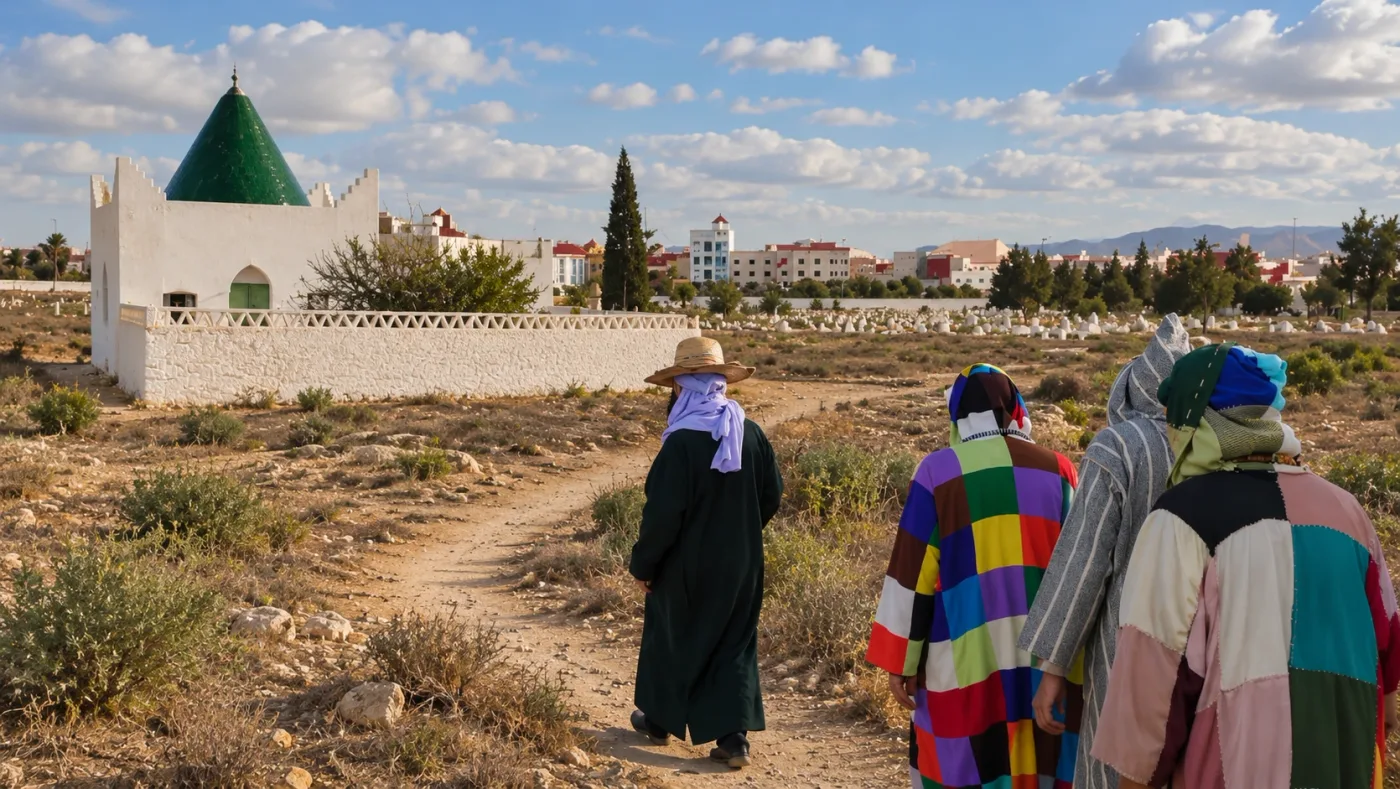
At the end of this battle, Sultan ‘Abd al-Malik's army won a total victory, leading to the death of King Sebastian I and of the traitor sultan al-Moutawakil. This victory brought about the end of the ruling dynasty in Portugal and the annexation of the country by the Spanish crown. Sidi ‘Ali Ibn Moussa was able to return to his home region, more precisely al-Aroui, where he was in fact buried. His mausoleum stands beside that of his father, Sidi Moussa Ibn ‘Ali, in the cemetery that bears his name at the entrance to the town.
Since the sixteenth century, twelve forefathers of Shaykh Mohamed Faouzi al-Karkari have thus been buried in the eastern Rif region, between al-Aroui and Tamsamane. Their domed mausoleums bear witness to the rootedness of this lineage in the region. Many of them were scholars of Islamic jurisprudence, but also knowers through Allah and guides on the path of spiritual realisation.
Sidi ‘Ali Ibn Moussa's son was Moulay Mohamed, whose son was Moulay al-‘Arbi, whose son was Moulay Ahmad, whose son was Moulay ‘Abd al-Qadir, whose son was the Shaykh and Pole of his time Sidi Mohamed Ibn al-Qaddur al-Boukili, fifth forefather of Shaykh Mohamed Faouzi al-Karkari.