News
The Sufi Islam of the Karkariya in the curricula of the leading American universities
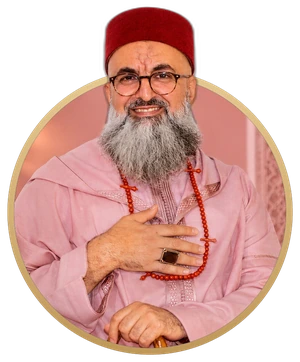
In a context of tension between certain currents of Islam and the Western world, Sufism appears more and more as a natural bulwark against religious radicalism, but also as a bridge that will help consolidate relations between Muslim and Western civilisation.
Since 2015, the founder of the Moroccan Sufi brotherhood “Karkariya”, Sidi Mohamed Faouzi al-Karkari, has indeed spoken regularly in Europe at conferences on diverse themes such as spirituality in the light of Islam or the importance of living together and respect for institutions. His many visits have made it possible to highlight the universal values of Sufism and to make an inclusive and spiritual Islam known to a broad and diverse public.
Since 2015, France has generously welcomed the Moroccan guide, who contributed to making known another approach to Islam in a difficult context as to the place of this religion in French society. After Europe, it is the United States that has opened its doors to him for an American tour during which he will give several lectures on several themes of the moment.
First stage: a lecture on AI at the University of Chicago
The first stage is none other than the prestigious University of Chicago, one of the most famous universities in the world, since it ranks 10th in the QS World University Rankings 2023 and has won 29 Nobel prizes as well as a Pulitzer prize in 2016.
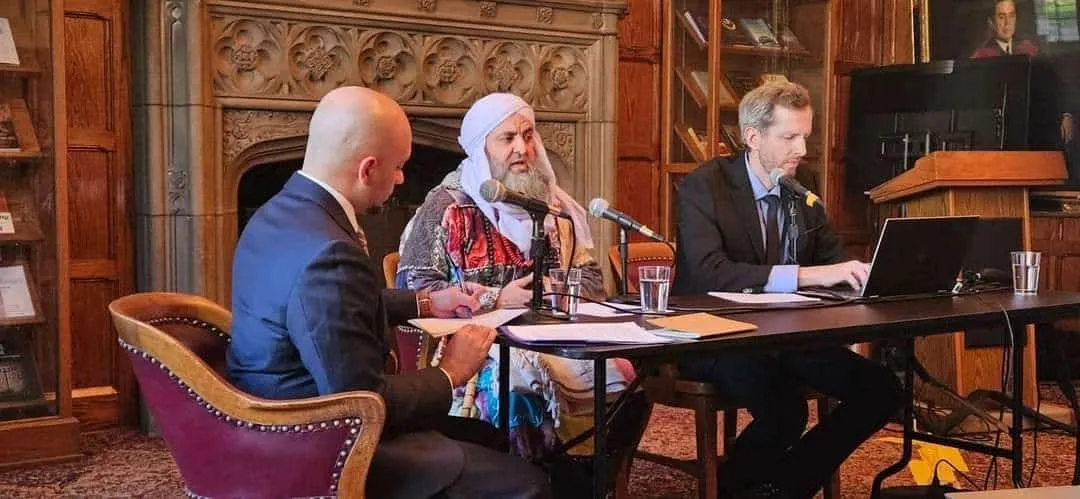
Sidi Mohamed Faouzi al-Karkari is at home in this high place of knowledge, since his books – translated into five languages – are all studied and taught at the Divinity School under the direction of Professor Yusef Casewit. He was therefore invited to explain how Sufism could help respond to the concerns and questions raised by AI, notably concerning the questioning of man’s hegemony. The other guest, Saad Ansari, a Yale alumnus and director at Jasper AI, shared his technical knowledge in the field of artificial intelligence.
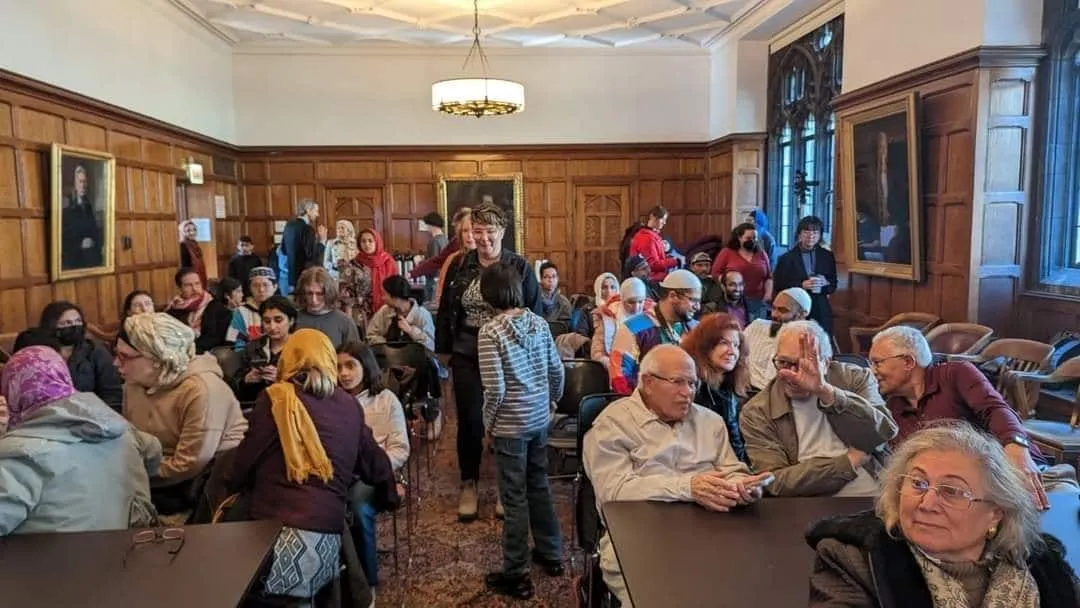
During this live-streamed lecture, the Leader of the Karkariya brotherhood was notably asked to speak on the following question: “what differences are there between the human intellect and artificial intelligence?” He did not hesitate to put man back at the centre of the chessboard by affirming that, in his capacity as God’s vicegerent, from the Islamic point of view, man would remain, whatever happens and whatever the technological progress, the earthly epicentre. He went on to say that the nature of knowledge in Sufism comes first through knowledge of one’s ego (self), and that this intrinsic knowledge of the ego comes through spiritual and sensory experience. He cited from the very beginning of the lecture the Qur’anic verse in which Moses was addressed by his Lord thus: “I have fashioned you for Myself.” According to Sufism, man was indeed fashioned by the divine in the most perfect of forms. He continued by saying: “artificial intelligence feeds on what the human intellect has produced and therefore, whatever its evolution, it remains dependent on humanity.”
It was also argued that AI, like any other vector of information, bookish or technological, remains a limited expression of the experiences lived by its author or creator. In Sufism, man being the microcosm of the macrocosm, a creation issuing from the human intellect constitutes a limited part of this microcosm and, for that reason, cannot worry man. Likewise, still from the point of view of Sufism, consciousness is defined as knowledge of oneself. This knowledge is subordinate to the person’s spiritual experiences. An artificial intelligence, whose nature is to emit information on the basis of a heap of information, cannot feel emotions or be conscious of them.
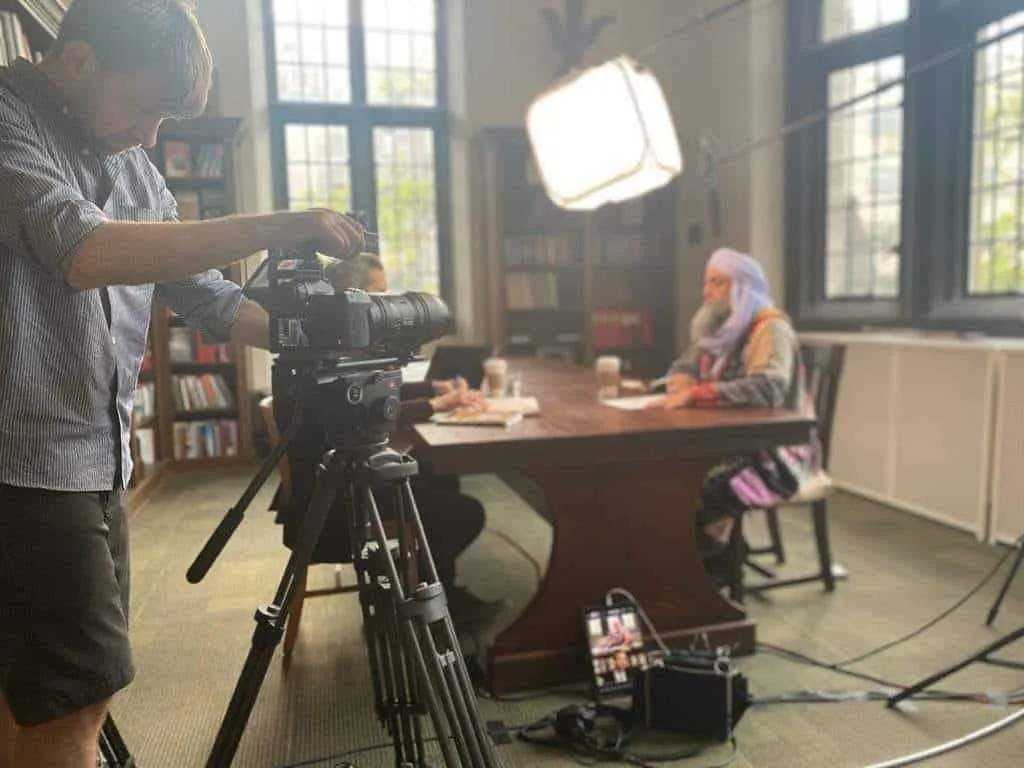
Thus Sufism offers an interesting perspective on these questions by emphasising the importance of ethics and conscience in the primordiality of man. Beyond the quality of the exchanges that thrilled the American public, this event marks the beginning of a strengthened intellectual and spiritual relationship between the United States and the traditional North African Islam of which Morocco is the spearhead.
Meeting with the representatives of the Jewish Federation of Chicago
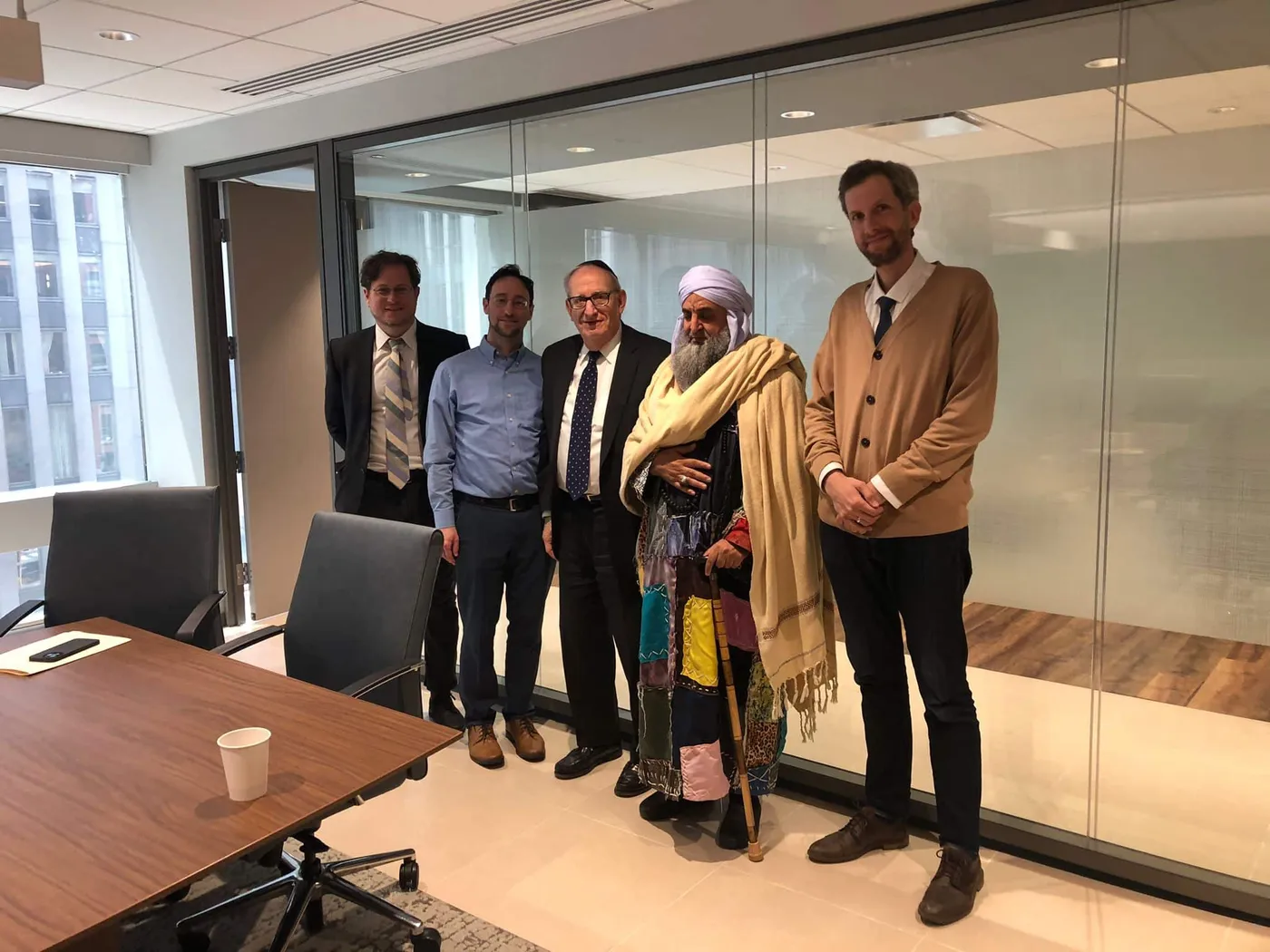
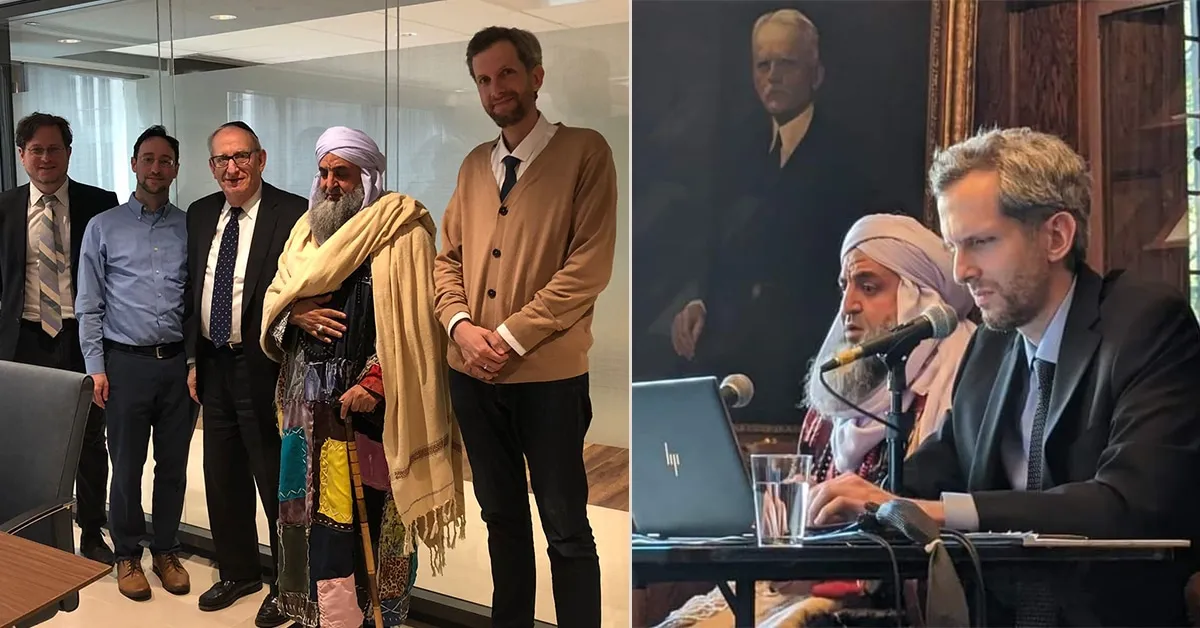
The very next day, Mohamed Faouzi al-Karkari was invited by the Jewish Federation of Chicago, on the one hand to answer a series of interviews and on the other to take part in an interfaith meeting in which also participated Dr Yusef Casewit, Professor of Islamic Studies at the University of Chicago, Professor and Rabbi Yechiel Popko, and Professors Jeremy Brown and Zvi Novick of the University of Notre Dame in Indiana.
Several subjects were addressed, such as the importance of science and sacred scriptures, the approach to knowledge of God through the prism of the different religions, and the bridges representing the unbreakable bonds that unite the Islamic and Jewish traditions.
And now?
Sidi Mohamed Faouzi al-Karkari will now continue his tour, notably to San Francisco, where he is expected at Stanford University, before flying out for the final stage of his tour in Washington.
Through this journey, the leader of the Karkariya demonstrates that religious actors from Sufism – a spiritual current of Islam – have a preponderant place to play in the great challenges that face us. They represent very important currents that can both establish solid bridges between Western and Muslim culture, and also, above all, be a real possible bulwark against the religious radicalism that gnaws at our society. It is therefore up to our institutions to consider them as credible intermediaries and to work with them to restore national harmony.