News
The seven commitments
بسم الله الرحمن الرحيم
و الصلاة و السلام على أشرف المرسلين
و على اله و اصحابه أجمعين
In the name of Allah, the Most Gracious, the Most Merciful.
May prayer and peace be upon the Jewel of Creation, Sayyiduna Muhammad, upon his family, his companions and his blessed descendants who will irrigate the hearts of the lovers until the end of time.
By the authorisation of the prophetic heir and trustee of the Muhammadan Light, the Khatm Sidi Mohamed Faouzi al-Karkari, we write this article on Monday 24 July 2023 / 6 Muharram 1445 in order to bear public witness to what seven disciples experienced in his company.
It is Sunday 24 February 2019 / 18 Jumada II 1440, the day after the arrival of Sidi Mohamed Faouzi al-Karkari at the Zawiya of Lyon/Condrieu. After praying the fajr and performing the wird in a group, some fuqara go back to sleep while others choose to read the Qur’an or to settle on the terrace to talk.
Sidi Mohamed-Florian took the opportunity to fetch his new musical instrument. He had set his heart on the Ney, a wind instrument made famous by the master Rumi, and this detail will have its importance later. After retrieving it, he joined the fuqara who had stayed seated on the terrace of the zawiya.
Around 9:30, Sidi Shaykh came down. He intended to take his daily walk. He went out by the terrace where we were sitting, accompanied by Sidi Karim Boukri. After greeting us, he left and, through Sidi Karim, he invited those who wished to accompany him.
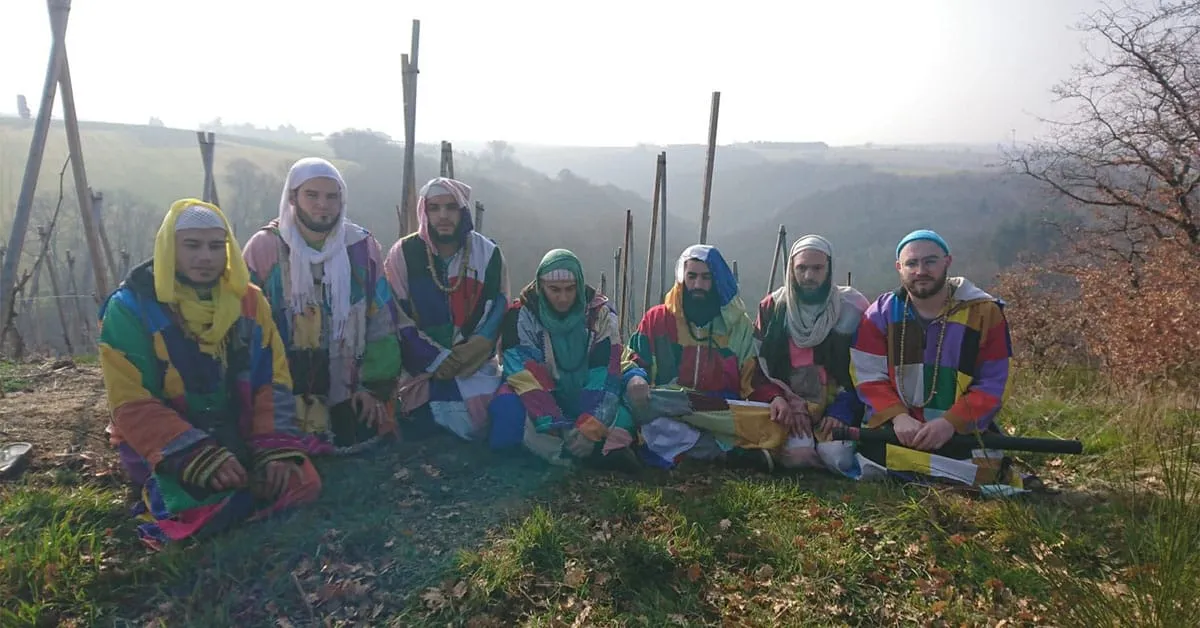
Six fuqara then rose to join Sidi Karim Boukri and accompany Sidi Mohamed Faouzi al-Karkari: Sidi Suhayl-Adrien, Sidi Ibrahim-Emmanuel, Sidi ‘Abd al-Qader-Benoît, Sidi Khalil-Sébastien, Sidi Mohamed-Florian and Sidi Mohamed Soussi. Sidi ‘Aissa-Pascal tried to join the group, but could not keep up with the pace and ended up turning back.
The group was engaged in a long walk alternating tarmac roads and beaten tracks behind the Shaykh, who strangely seemed to know perfectly where he was going. We thought we were going for a simple morning stroll as we were used to taking regularly with him, but what awaited us was quite different. After walking about five kilometres, Sidi Shaykh took a path that led the group to a spot overlooking the Rhône valley and offering a breathtaking view.
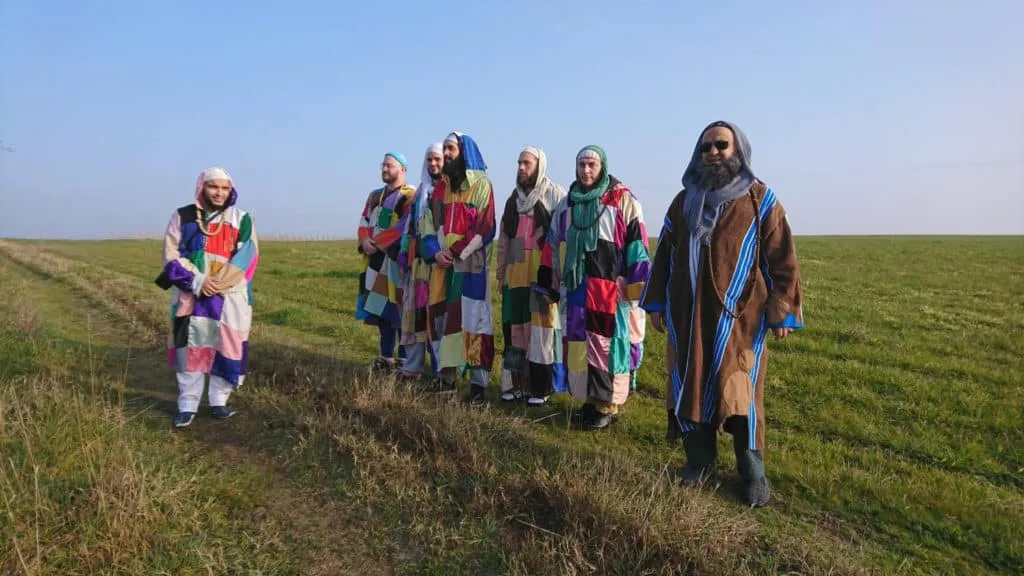
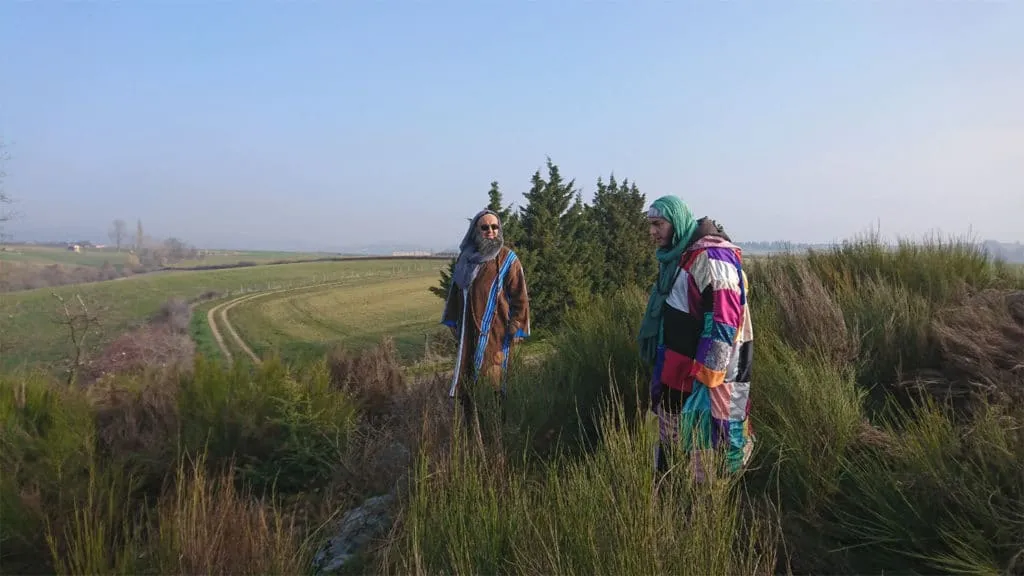
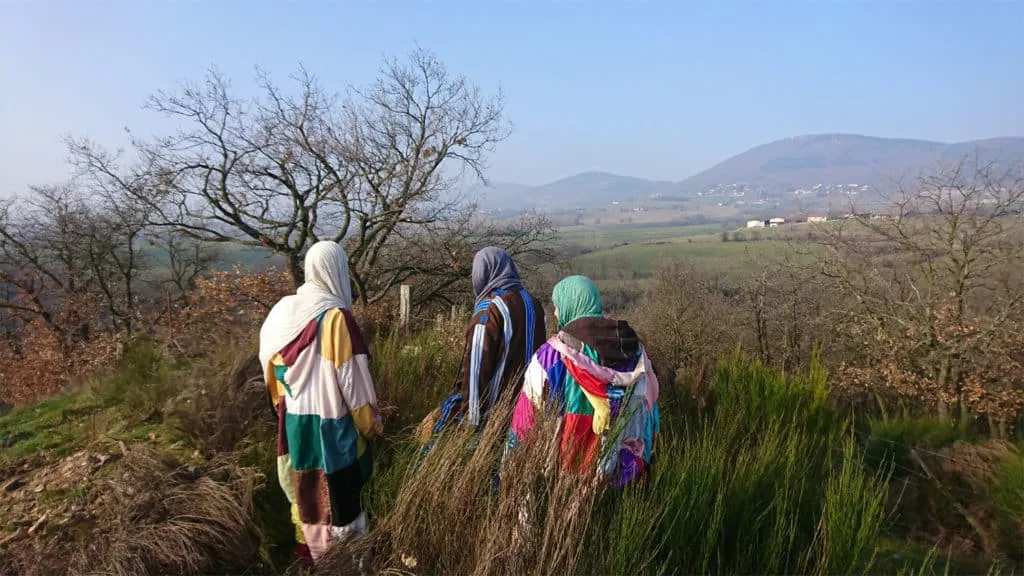
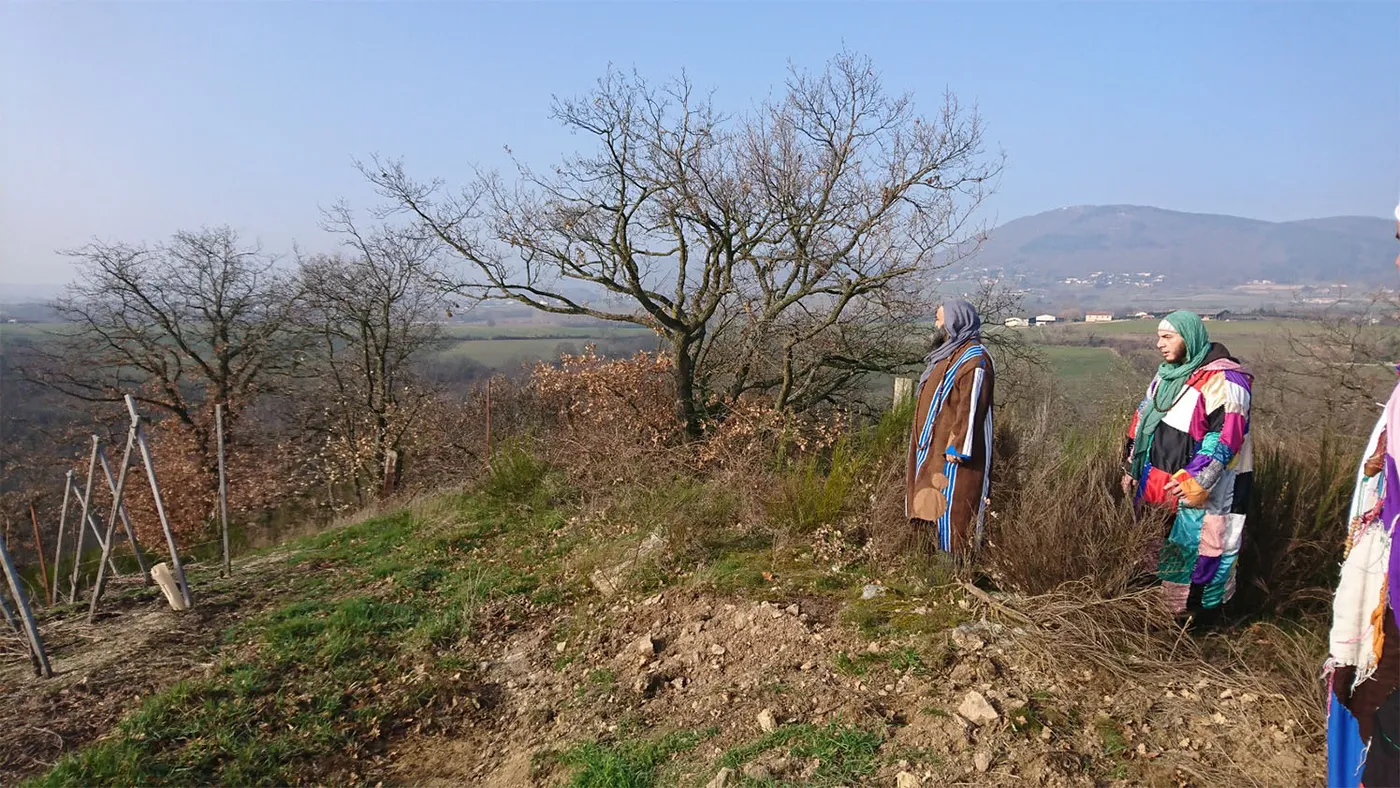
We were at the top of a fairly steep slope with vineyard stakes stripped of vines and a lot of vegetation and tall grass. After taking a few photos, Sidi Shaykh went without a word to a small rock and sat on it cross-legged. Behind him was a small hill with a few shrubs, bushes and tall grass (and this detail will have its importance later). We then understood that we were going to do dhikr, and we immediately sat facing him, forming an arc of a circle like a “Nun” of which the Shaykh would be the point.
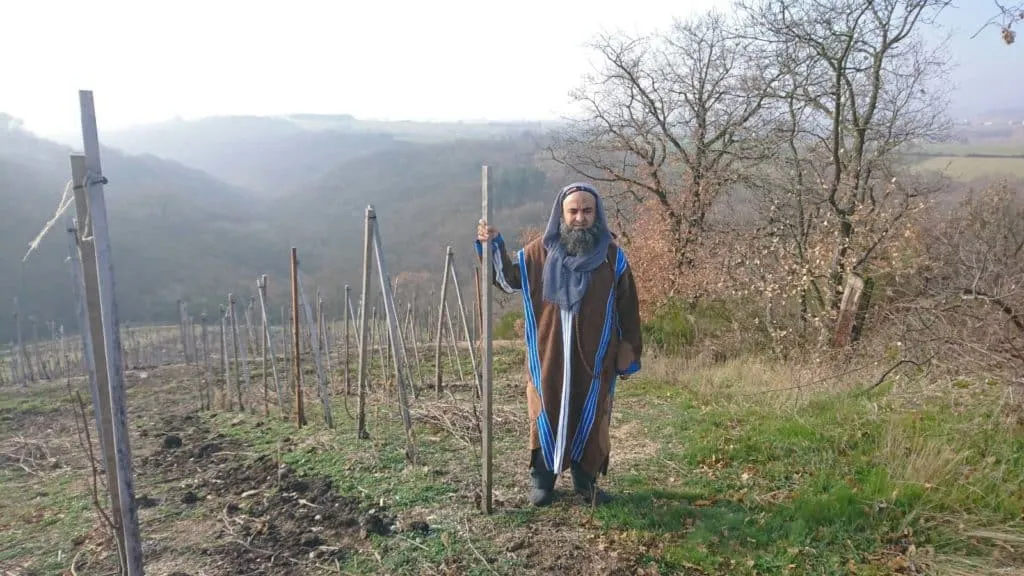
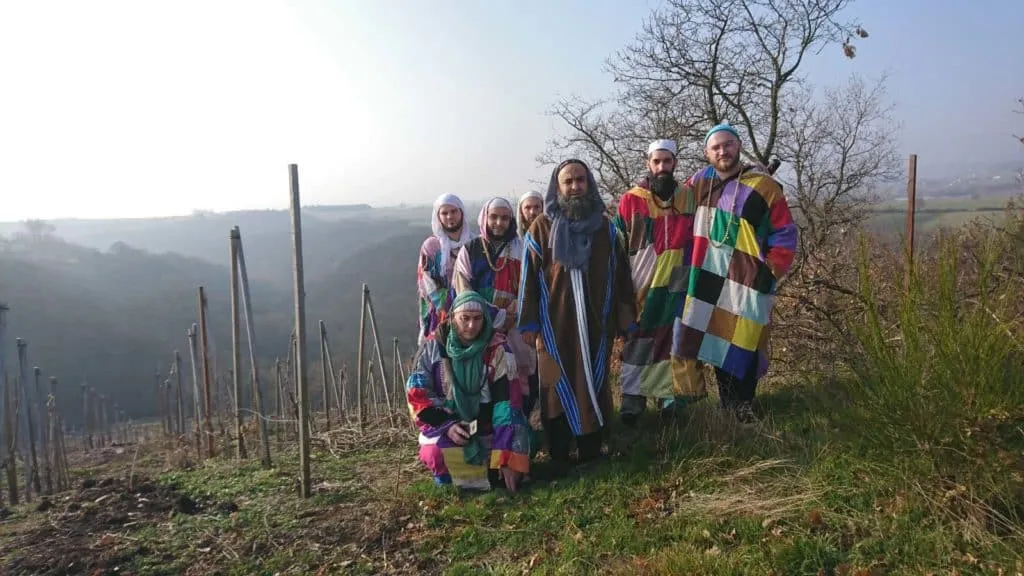
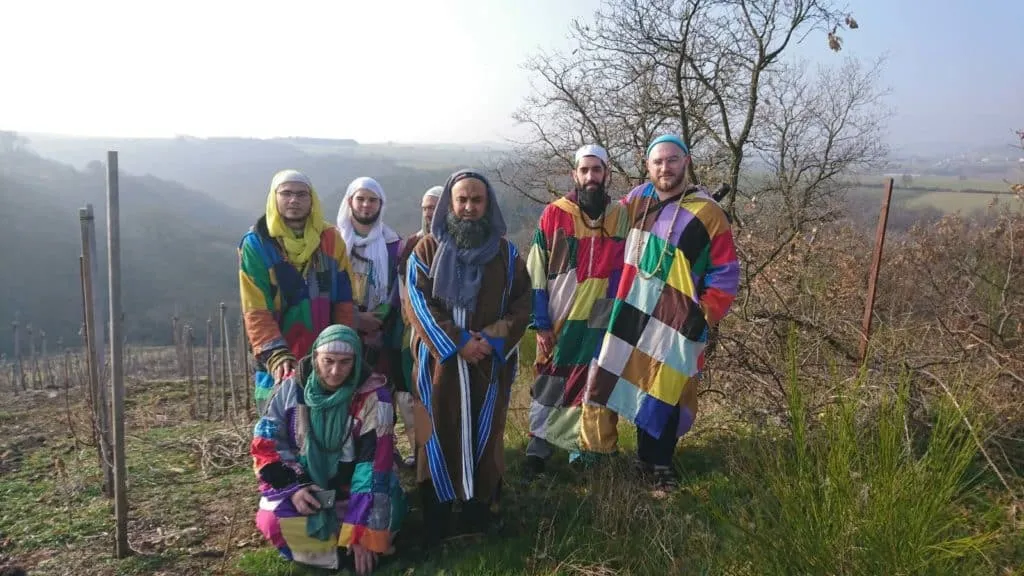
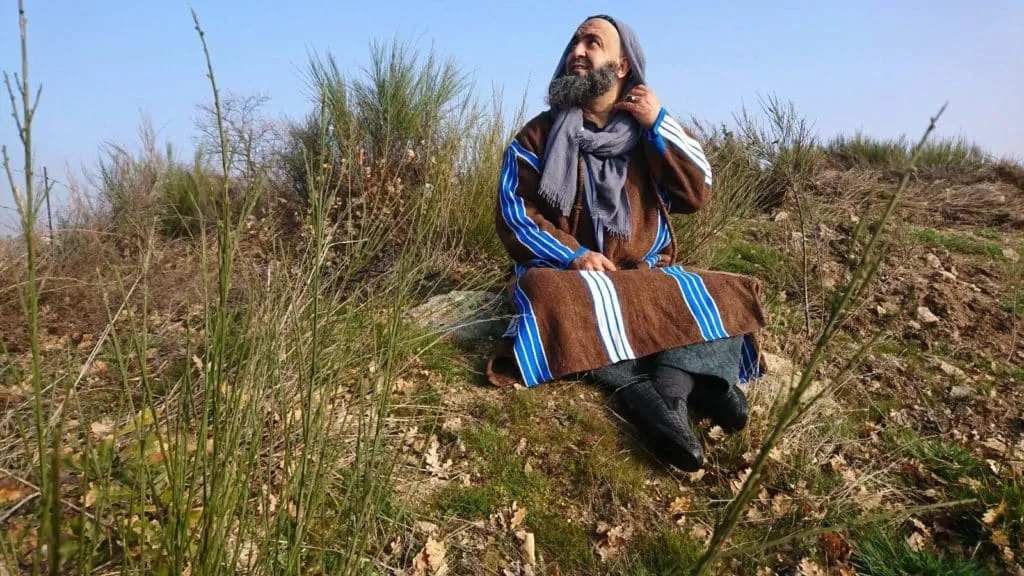
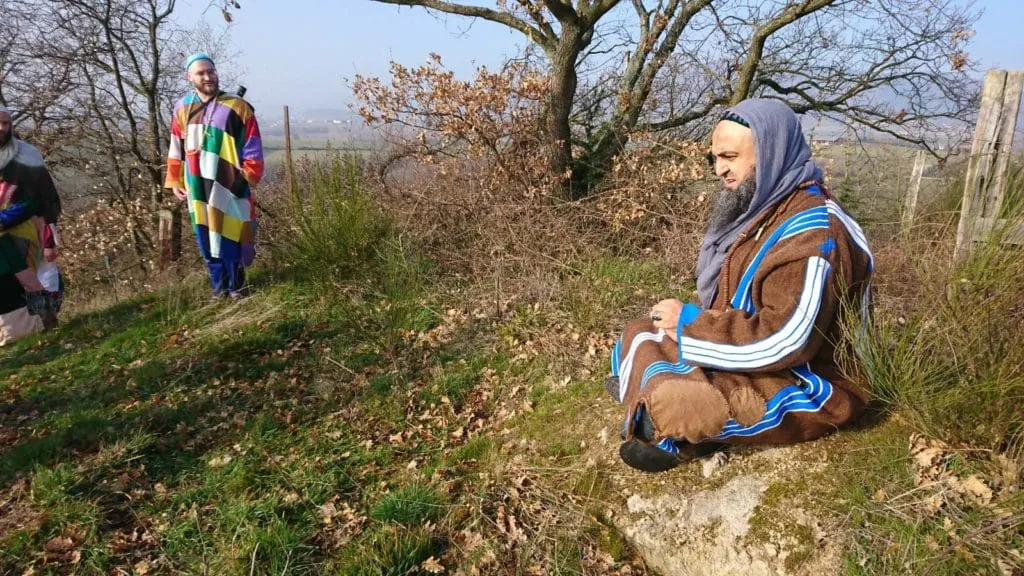
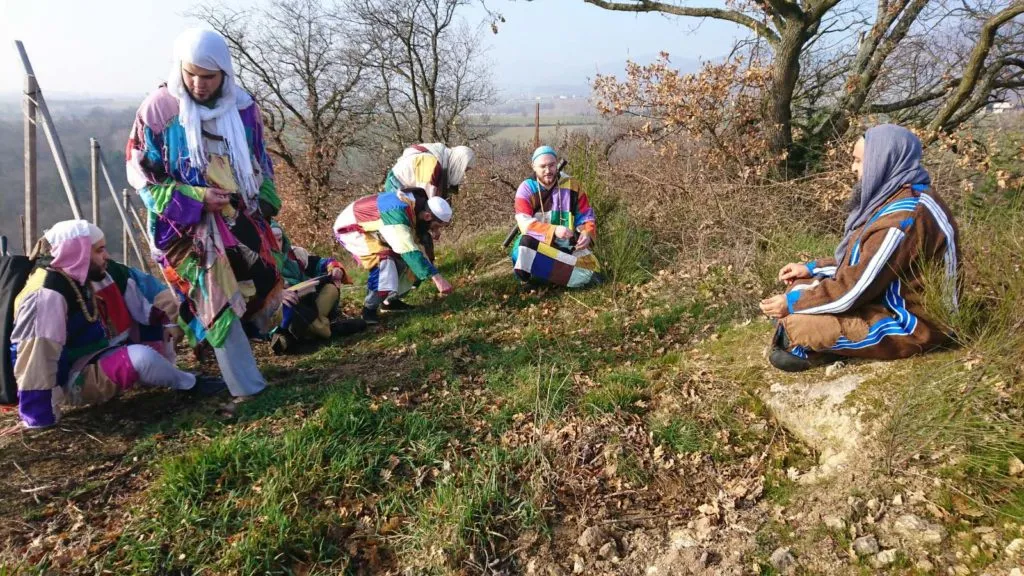
Sidi Mohamed Faouzi al-Karkari then began with the renewal of the bay‘a, which we all recited together, then, with his eyes tightly closed, he called on Sidi Suhayl and asked him to recite a few verses of the Qur’an to us.
The latter recited verse 143 of Surat “Al-A‘raf” [1]: “And when Moses arrived at Our appointed time and his Lord spoke to him, he said: ‘My Lord, show me [Yourself] that I may look at You.’ [Allah] said: ‘You will not see Me, but look at the mountain; if it should remain in place, then you will see Me.’ But when his Lord appeared to the mountain, He rendered it level, and Moses fell unconscious. And when he awoke, he said: ‘Exalted are You! I have repented to You, and I am the first of the believers.’”
He then continued with Surat “Al-Kawthar” [2]: “Indeed, We have granted you, [O Muhammad], al-Kawthar. So pray to your Lord and sacrifice. Indeed, he who hates you is the one cut off.”
Finally, he ended with Surat “Al-Ikhlas” [3]: “Say: ‘He is Allah, [who is] One, Allah, the Eternal Refuge. He neither begets nor is born, nor is there to Him any equivalent.’”
Still with his eyes and face closed, Sidi Mohamed Faouzi al-Karkari called on Sidi Mohamed-Florian. The latter had brought his Ney with him, and Sidi Shaykh asked him to play a tune. Sidi Mohamed-Florian answered that he did not yet know how to play it well, but the Shaykh insisted, saying it did not matter. Sidi Mohamed-Florian complied and tried the exercise for a few minutes.
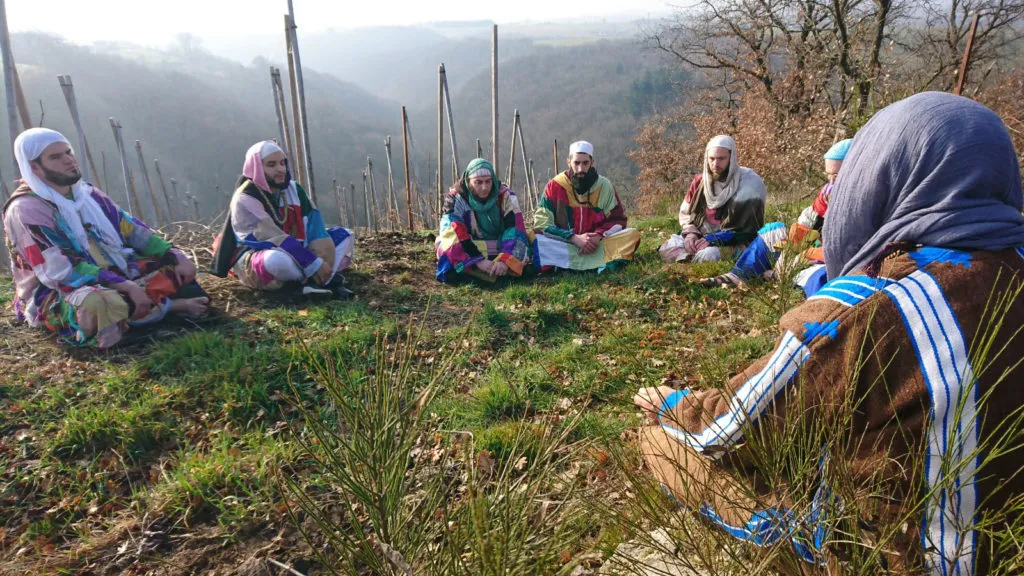
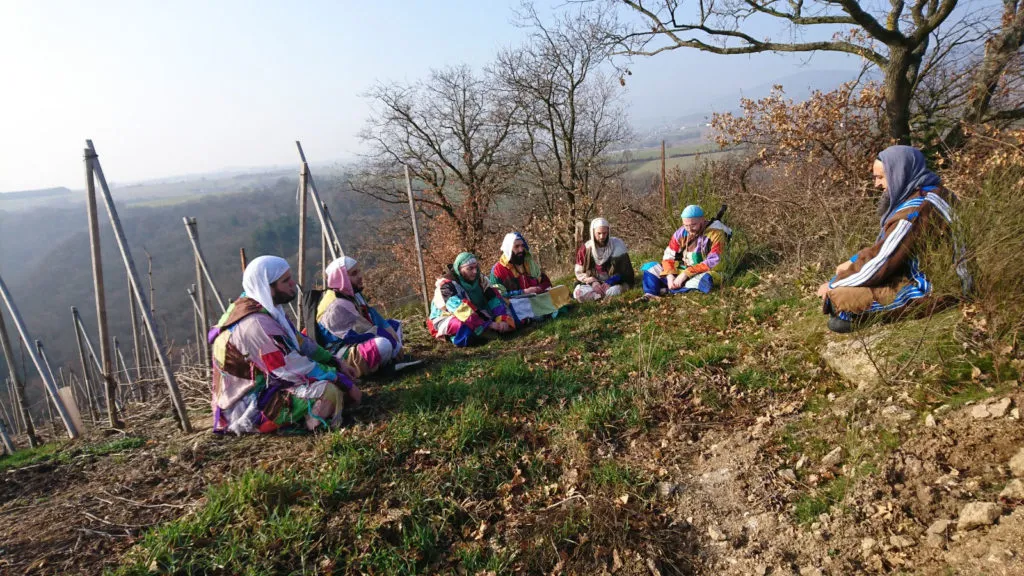
When he had finished, Sidi Shaykh pronounced the double declaration of faith several times, followed in this by the fuqara, then went on with the salat al-Ibrahimiyya and again the verse of the bay‘a, then said to us: “Now I am going to question you one by one. Each of you will have to say something, an intention, a project close to your heart that you would like to do solely for Allah ﷻ”, and he questioned the disciples from his right to his left.
- Sidi Mohamed-Florian: “I would like to play the Ney for Allah.”
- Sidi ‘Abd al-Qader-Benoît: “I would like to have certainty (yaqin) in each of my acts.”
- Sidi Ibrahim-Emmanuel: “I would like to make a siyaha (wandering) for Allah.”
- Sidi Karim: “I would like to work for the Shaykh and the Ahl al-Bayt.”
- Sidi Mohamed Soussi: “I would like to write books for Allah.”
- Sidi Suhayl: “I would like to translate all of Sidi Shaykh’s books.”
- Sidi Khalil-Sébastien: “I would like to be a source of good for my loved ones and for all the fuqara.”
Sidi Mohamed Faouzi al-Karkari then spoke. He began by telling us that each of us was now committed before Allah ﷻ to what we had asked for in this blessed place. He added that everything that had just happened owed nothing to chance and was solely the expression of the divine will:
“Look how Allah does things! You are all people of this country. You were all born here and there is no foreigner among you. When I left the zawiya, greeted you and you followed me, there were other fuqara with you. Yet they did not come. Why? Because you had to be all 7, like the 7 heavens. It was predestined for you. If you look closely, you are therefore 7 and with me we are 8, which refers to the letter ‘ح’ symbolising the angels who bear the Throne. You will understand this when you understand the force and importance of the number 7.
Do not see this as something difficult, because what you pronounced did not come from you. Do not regret your request and do not tell yourselves things like ‘I should have asked for this or that instead’, because you could not have asked for anything other than what you asked for. You were predestined for this, and it is the work about which you can be certain that it will truly be ‘lillah’. Everything else is doubtful. That is why, when you do it, it will be like doing dhikr. And in the same way that Allah gathered you as seven, you must always try to use this number everywhere.”
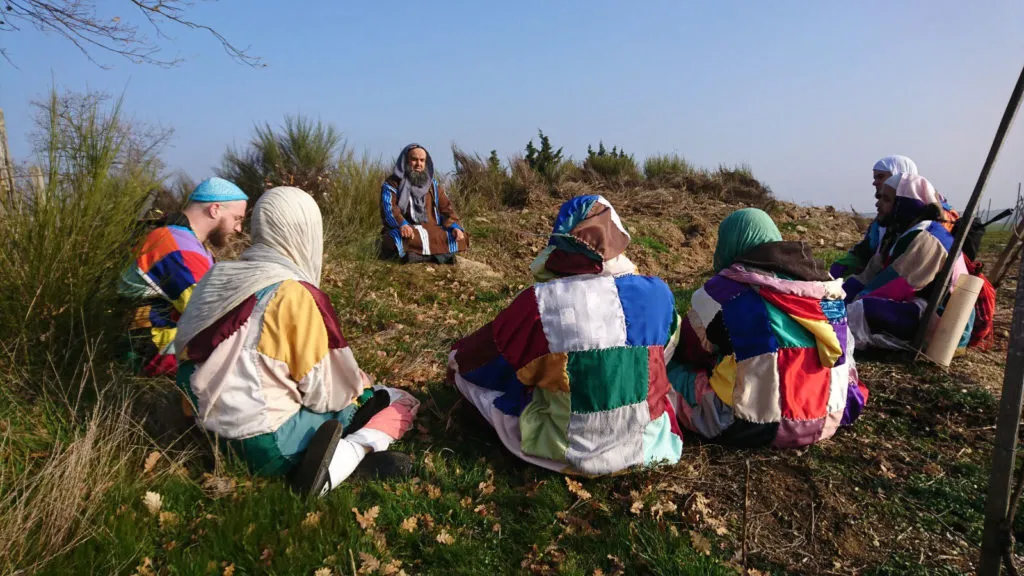
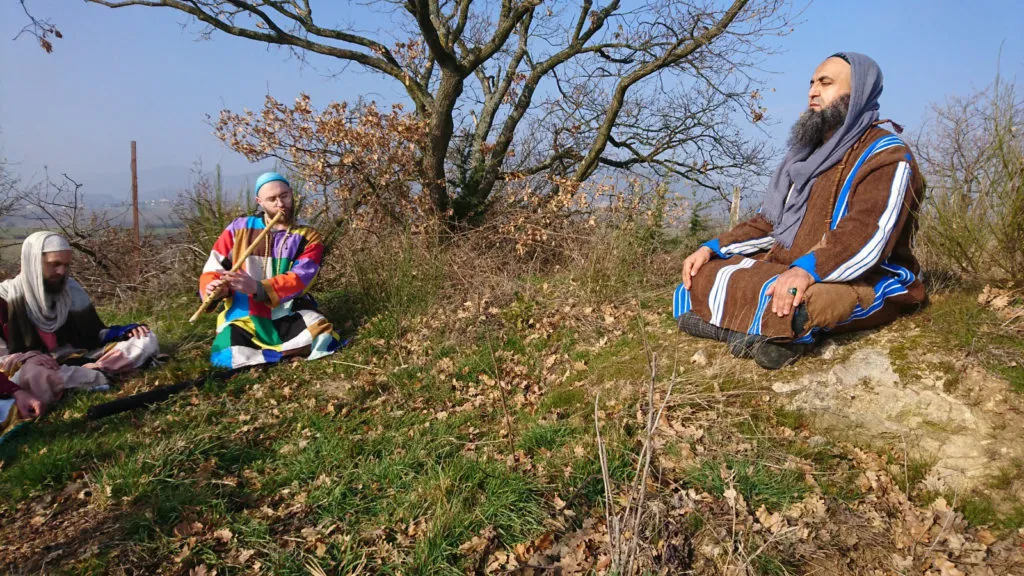
He then called on each disciple individually, taking up the request made:
- Sidi Mohamed-Florian will have to learn to play the Ney and use it only for da‘wa for Allah ﷻ. For example, he could make it a symbol that would appear in his videos for the tariqa. Also, he must always try to make the number 7 appear, for instance by making melodies in which this number would be present. If he works well at this, he could become a very great Ney teacher.
- Sidi ‘Abd al-Qader-Benoît will have to seek certainty in all things. He must do everything to obtain this yaqin he seeks. He will need to reflect on the hadiths concerning certainty and to be in the vision of the Light before, during and after each thing, for it is the Light of certainty (Nur al-yaqin). In doing so, he could for example learn the rules of jurisprudence and creed and try to place the number 7 in this.
- Sidi Ibrahim-Emmanuel will have to do his utmost to take part in all the siyaha of the fuqara. He must make the number 7 appear as much as possible, for example by counting his steps.
- Sidi Karim must be ceaselessly in the service of the Shaykh and his family, and constantly seek to please them. In his action, he must make sure to use the number 7 as much as possible, for example by looking at the Shaykh 7 times.
- Sidi Mohamed Soussi will have to learn the codes that will enable him to write a book, and he must make the number 7 appear in his books, dividing them for example into seven chapters.
- Sidi Suhayl will have to systematically translate each book of the Shaykh as well as his lessons, and he must find a way to make the number 7 appear in this work of translation and writing.
- Sidi Khalil will have to make sure to be a source of good for everyone. He must make sure to be a solution for everyone. He must always put others before himself, and make the number 7 appear in each of his actions, for example by helping seven men and seven women.
Sidi Shaykh then continued, telling us:
— Tell me, where is the qibla?
— Sidi Khalil looked on his phone and answered: “It is in front of you, Sidi.”
— Look carefully where I am sitting! The Shaykh is facing the qibla and facing the rising Sun in the time of the Duha prayer. If one day you forget your commitment or have difficulty keeping it, come back to this place, which is now a place full of blessings, and sit here – he pointed to a space behind him and went on – renew then your intention and ask for what you desire.
— He then asked the disciples: Do you have any questions?
— Sidi Khalil exclaimed: It is a great responsibility, Sidi!
Sidi Shaykh then asked Sidi Khalil to lend him his phone and took seven photos of the fuqara from his own point of view, pronouncing something as he did so, then said: “Here are seven photos that were taken here. There is one for each of you. Each of you take your photo and keep it preciously at home. If your himma weakens in the fulfilment of your commitment, look at it and you will see that the Shaykh is not in it, because he himself took it.”
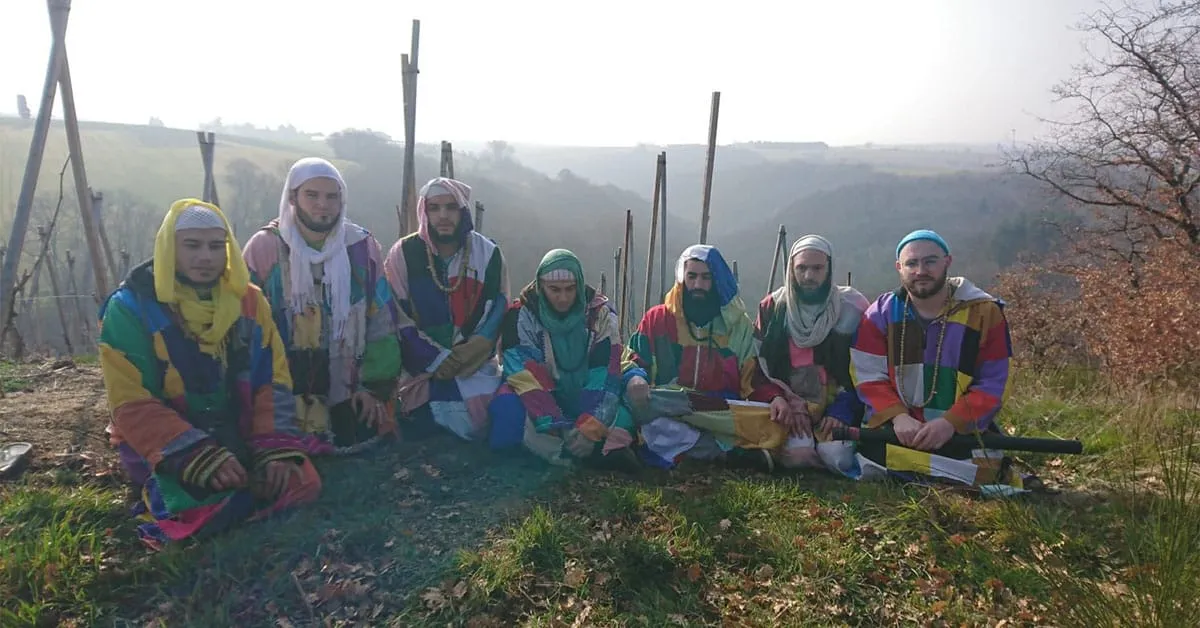
We closed the gathering with the group recitation of several surahs, and before rising Sidi Shaykh said to us: “If you only knew, a very great theophany (tajalli) has descended on this mountain.”
Our Shaykh then rose and the disciples drew near to kiss his hand. He then took the road to the zawiya with Sidi Karim and Sidi ‘Abd al-Qader, while Sidi Suhayl, Sidi Ibrahim and Sidi Mohamed Soussi recorded the place on their GPS. Some picked up a pebble from the spot where the Shaykh had sat, others took photos of the place in order to remember each one’s position, and then we took the road again.
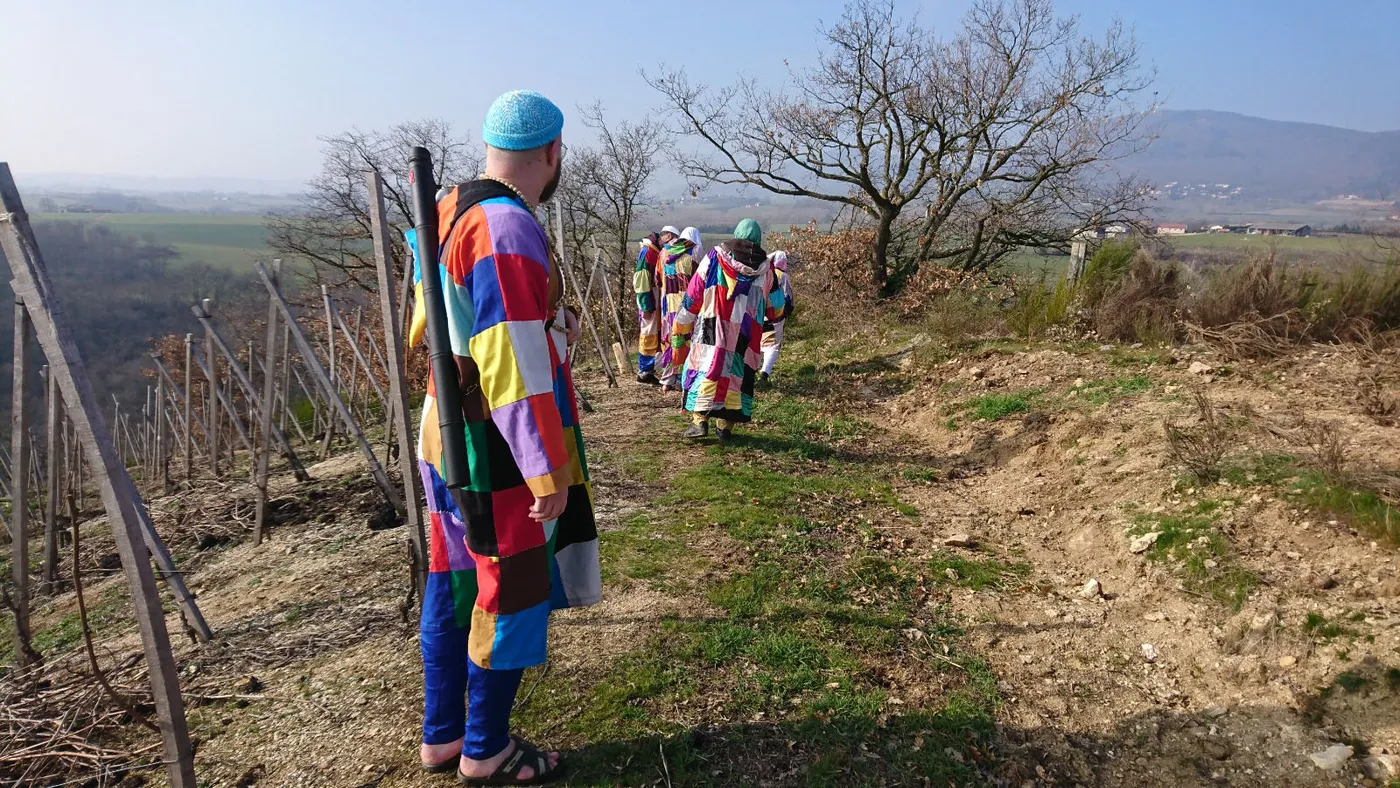
We had been there for nearly an hour. As we left the beaten tracks and reached the road, we ran into a good ten fuqara who had been looking for us for some time. They joined us to take the road back to the zawiya.
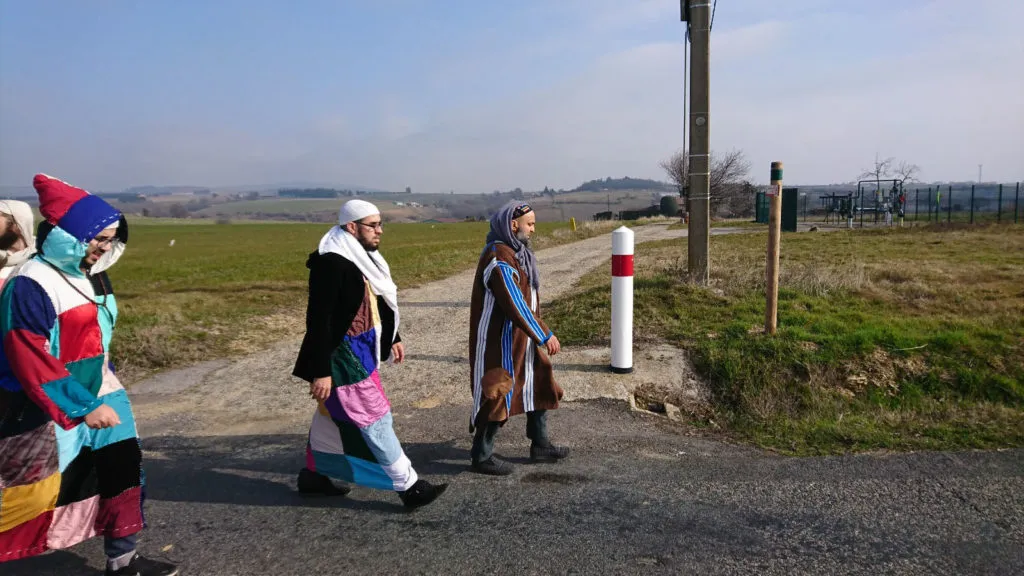
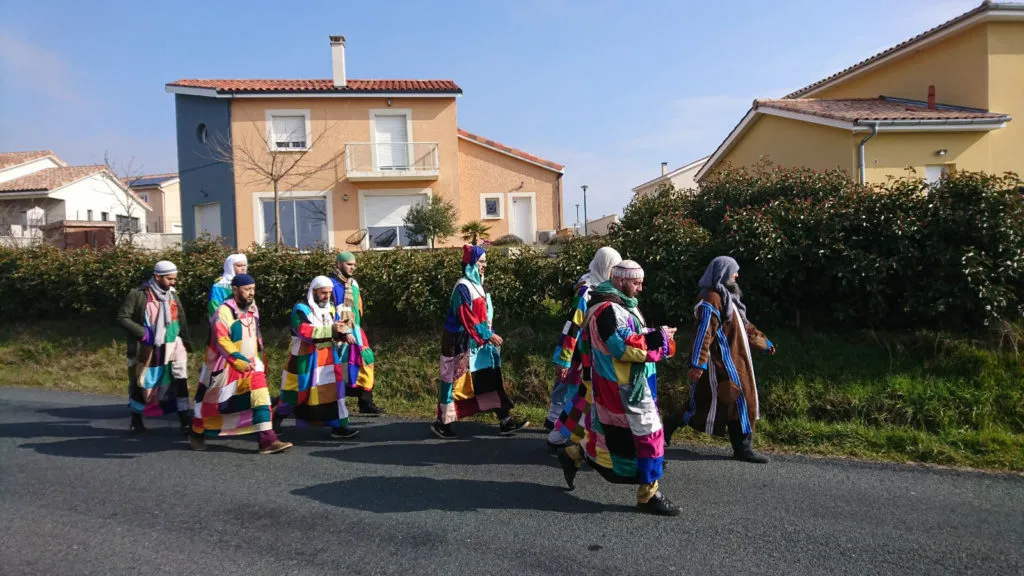
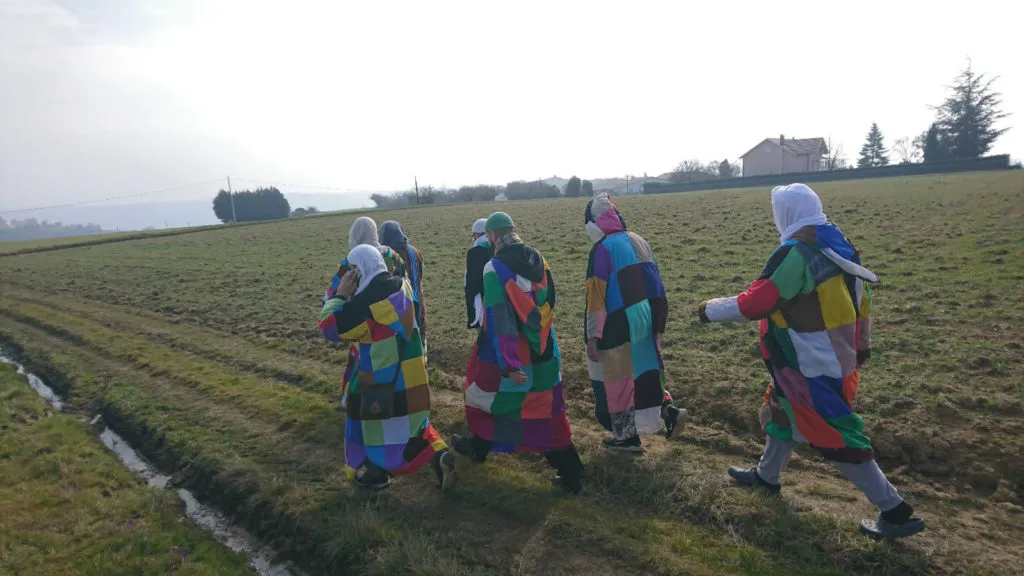
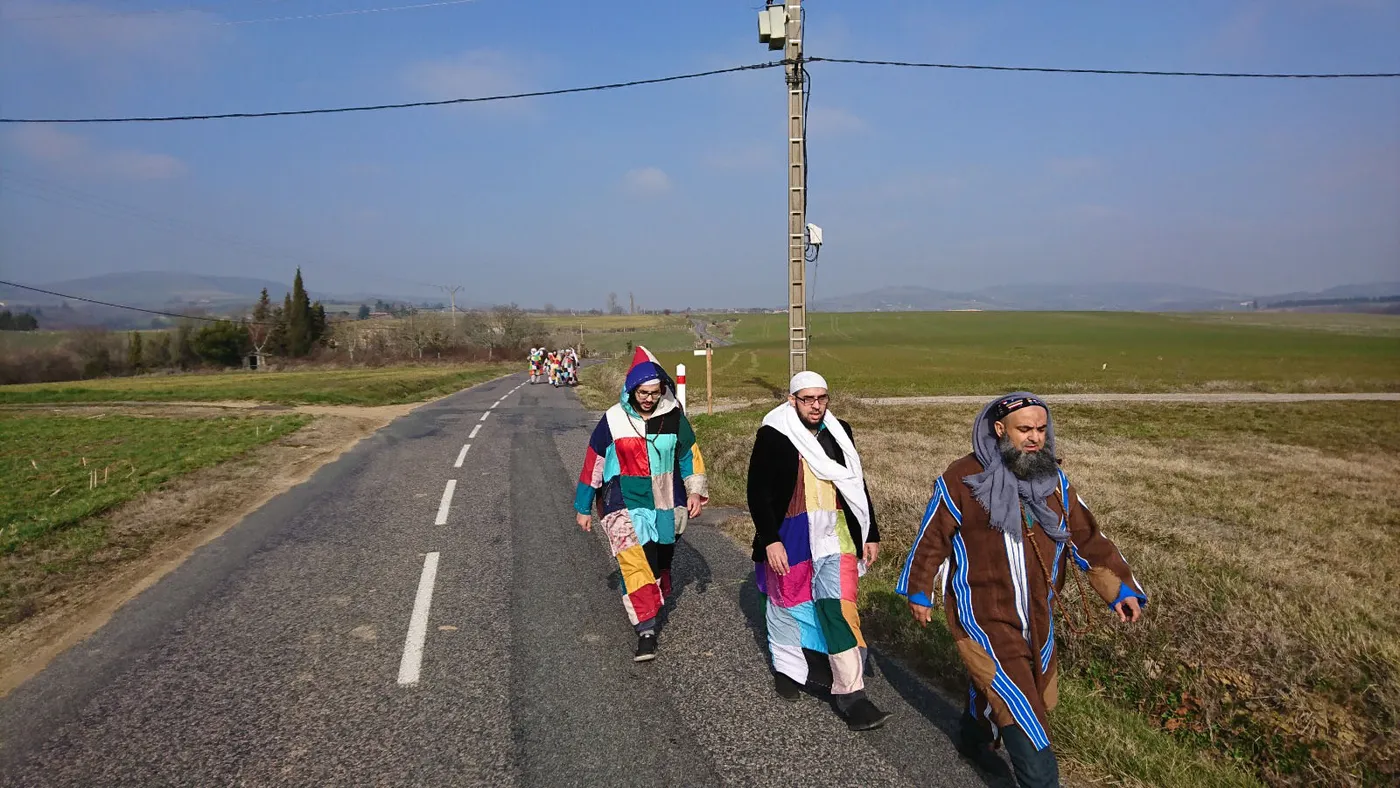
Since that day, Sunday 24 February 2019 / 18 Jumada II 1440, each of us has tried to put his commitment into practice as far as possible. When an event was organised at the zawiya of Lyon/Condrieu, we went discreetly to this blessed place to renew our bay‘a, benefit from its blessings and try to draw there the necessary himma (spiritual flow) by recalling this unique moment with our Shaykh. Each time, we found this little hill in the same state. It seemed neglected and abandoned among the vineyard stakes, with a lot of weeds and bushes.
It was so until Sunday 2 July 2023 / 14 Dhul Hijja 1444. Present at the zawiya of Lyon/Condrieu, Sidi Suhayl, Sidi Ibrahim-Emmanuel and Sidi Mohamed Soussi took the opportunity to go off discreetly to renew their commitment. After 15 minutes’ walk they reached the beaten path leading to the place of their commitments. They noticed a first thing: what had at the time been only meadows had become vast, green vineyards. They continued on their way until they reached the hill, and they were stunned by what they discovered there.
As we described earlier, behind the rock on which Sidi Shaykh had sat there were small abandoned shrubs as well as a lot of tall grass and bushes, which made this little hill hard to reach. Now this was no longer the case. The whole area had been completely cleared. There was no shrub left, no bush. The only thing that stood in place of all that was a small olive tree planted at the very spot where we had pledged ourselves before Allah ﷻ, His Prophet ﷺ and His Wali.
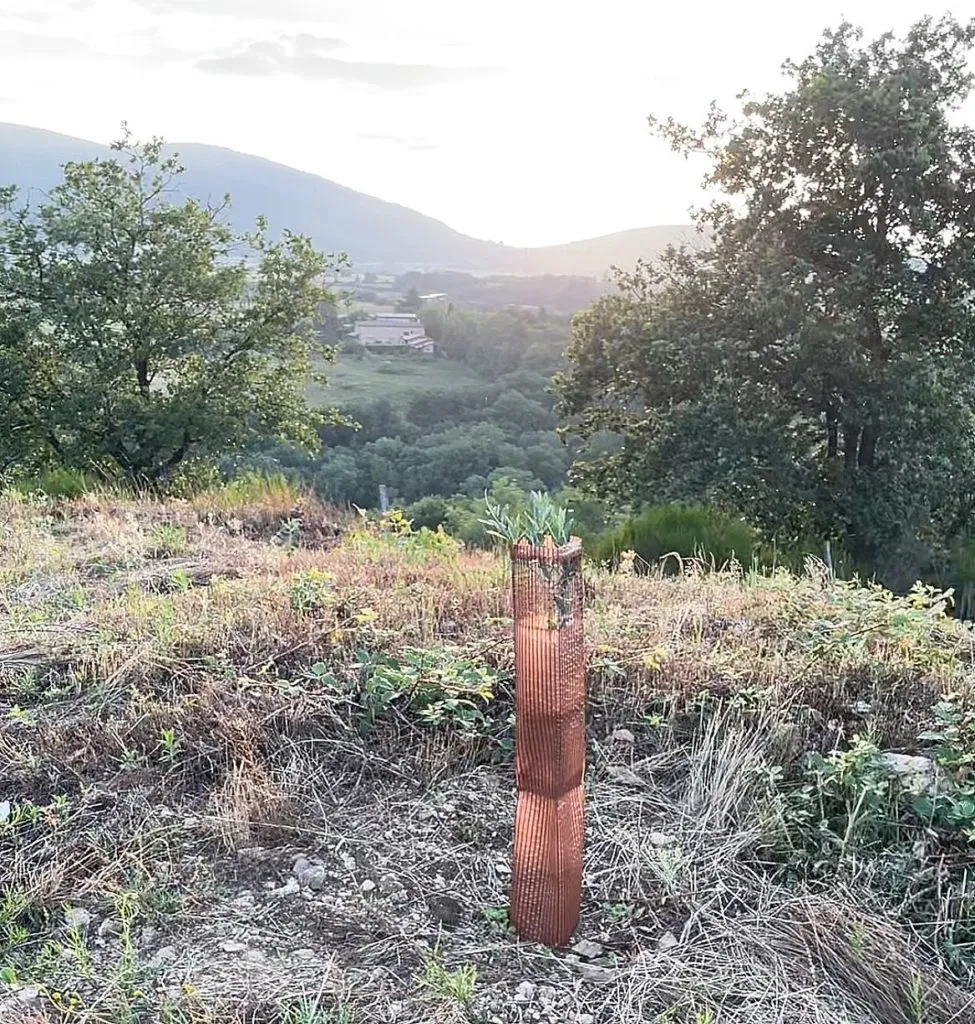
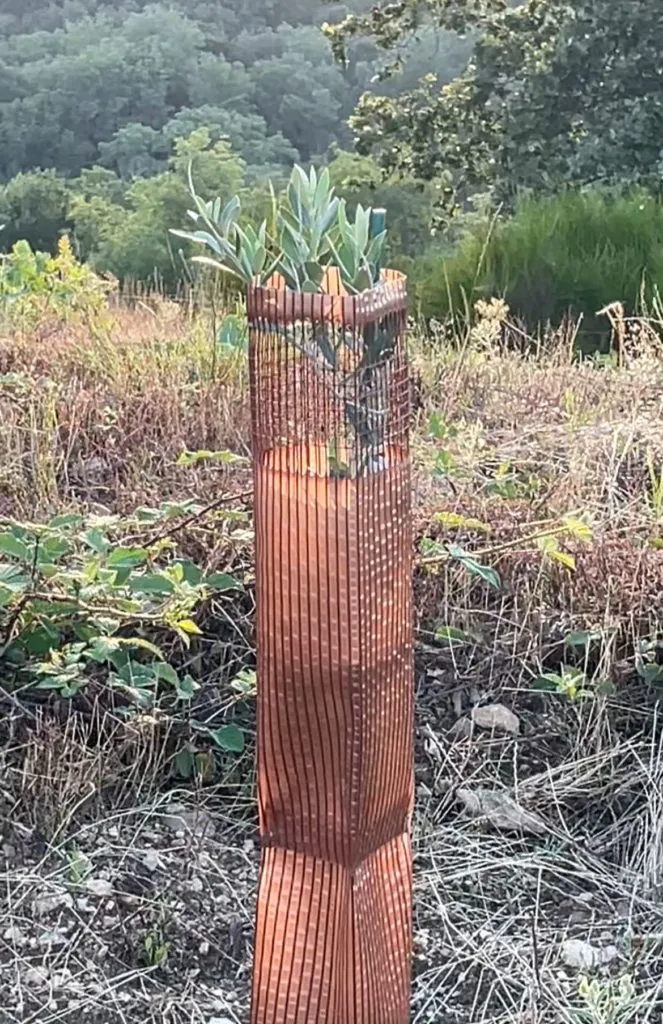
This may seem trivial to some, but it is a true miracle for one who knows the meaning and symbolism of the olive tree. It is indeed not a tree like the others, since it is the blessed tree par excellence and one of the noblest creatures with the Lord. It is moreover described thus in the sacred texts of the three monotheistic religions.
In the Qur’an it is cited seven times, again referring us to this number on which our Shaykh had insisted at length. Among its occurrences is a verse that shows its very great nobility. Indeed, in Surat at-Tin, Allah ﷻ swears by the olive: “By the fig and the olive! And [by] Mount Sinai! And [by] this secure city!” [4]
In the exegesis of this surah, Sidi Mohamed Faouzi al-Karkari tells us in a gathering:
“Allah ﷻ swears by the fig, by the olive, by Mount Tur and by the secure City, that is, Makka al-Mukarrama (Mecca). It is as if Allah ﷻ had honoured and ennobled these things by which He swears (qawasim) above all others.”
He adds concerning the olive: “It is the blessed (mubarak) tree. One draws from it fruit, oil and a remedy, and in most cases the olive is a tree that needs no particular care from men. It rises by itself and grows by itself.” [5]
The nobility of this tree is moreover confirmed by the Prophet ﷺ, who gave us this advice: “Eat the (olive) oil and anoint yourselves with it, for it comes from a blessed tree.” [6]
In another prophetic tradition, Mu‘adh ibn Jabal passed by an olive tree from which he took a branch with which he cleaned his teeth, saying: “I heard the Prophet ﷺ say: ‘What a good siwak the olive is: a blessed tree by which the mouth becomes pleasant and which removes bad smell from it, while being a remedy for the gums. It is my siwak, as well as the siwak of the prophets before me.’”
The olive is a tree so noble and so blessed that it was clearly cited in the verse of Light [7] in which Allah ﷻ describes to us His Light and the way it manifests in the heart of the traveller. He says: “Allah is the Light of the heavens and the earth. The example of His light is like a niche within which is a lamp; the lamp is within glass, the glass as if it were a brilliant star lit from a blessed olive tree, neither of the east nor of the west, whose oil would almost glow even if untouched by fire. Light upon light. Allah guides to His light whom He wills. And Allah presents examples for the people, and Allah is Knowing of all things.”
Our Lord explains to us in the preamble that He is the Light of the heavens and the earth. This Light being uncreated and therefore inaccessible to creatures, He drew from it a perfect and extremely lofty example, which is the Muhammadan Light. It is from the latter that He created the whole of creation, as He specifies to us in a divine (qudsi) hadith: “When I wished to create creation, I took a handful of My Light and said to it: ‘Be Muhammad!’, and I then created everything from its Light.”
We are thus speaking of the source of all creation, a source that unfolds in four examples, the niche, the lamp, the glass and the brilliant star, all of which come from a very particular and blessed tree: an olive tree. It is thus very clearly understood that the olive is not a creature like the others but the symbol of the divine presence, and this is also confirmed in the other holy books. In the Old Testament, it is said about the Prophet Nuh (Noah): “The dove came back to him in the evening, and behold, a freshly plucked olive leaf was in her beak. So Noah knew that the waters had subsided from the earth.” [8]
It is not insignificant that, in the context of the Prophet Nuh, that of a flood that devastated everything, his Lord decides to indicate to him (ishara) that life is again possible on earth by means of an olive branch. Among all creation and all that composes it, it is the olive branch that was chosen to make life apparent.
The same is true in the New Testament, where the olive is cited very many times. Many episodes of the life of Jesus, for example, took place on the famous Mount of Olives, the highest point of the holy city of Jerusalem. It is where he had his last meal and where he made his prayer before the Ascension (according to Christian dogma).
If one looks at the religious practices of the monotheistic religions, one sees that the olive holds an equally important place. In the biblical rites, olive oil is used to accompany the offerings, but above all it is used as fuel to light and purify the sacred places. It is also the case in Judaism, since all the synagogues around the Mediterranean used olive oil to remain constantly lit. It was also used to light the great seven-branched candelabrum (the menorah) as well as the lamps in the niches of the Temple of Jerusalem. When it ignites, olive oil has the particularity of producing a great flame with little smoke, which is why it is perceived as the symbol of the divine presence (the shekhina).
The olive is thus very present in the three monotheistic religions. It symbolises the source of the Muhammadan Light. It symbolises the fuel by which this Light descends and illuminates the hearts of the believers in the form of the four examples. It symbolises what allows the aspirants to Allah ﷻ to reach the primordial reality of creation. It symbolises life for Noah and ascension to the Lord for Jesus. It symbolises the message of our Lord ﷻ through a trunk firmly rooted so that it never wavers, and branches extended in every direction to allow all who wish to hang their heart on it so that they may be irrigated by the Light of spiritual life.
In other words, the olive symbolises the Wali of Allah. Its trunk refers to the uprightness of the Wali and to his perfect alignment, inner and outer, with the Messenger of Allah. Its branches are so many possibilities for those who wish to take the hand of the Wali in order to receive the bay‘a that allows the Muhammadan Light to set hearts ablaze.
It is for all these reasons that we saw in the presence of this tree a very clear ishara (indication) from our Lord ﷻ. We were all the more stunned in that it was the only olive tree for kilometres around, since it is a tree that generally grows around the Mediterranean, where the climate is milder, and not in the middle of the mountains. Why then plant a small olive tree alone on a small hill among rocks and vineyards?
We were so astonished that we took a photo to send to our Shaykh Sidi Mohamed Faouzi al-Karkari, to which he answered: “Hafidhakum Allah, hafidhakum Allah (may Allah preserve you). Here is a clear proof! In every place to which the Wali of Allah goes and in which he gathers for the dhikr of Allah, one sees appear a blessed tree, neither eastern nor western, an olive luminous by the permission of Allah and of His Prophet ﷺ.”
It is 2023, and four years have now passed since these seven commitments were made. If we make this public, it is not by our own choice but by the authorisation of our Shaykh Sidi Mohamed Faouzi al-Karkari, and it pursues a twofold aim. First, it is for us to obey the injunction of our Lord who commands us: “And as for the favour of your Lord, report [it].” [9] And indeed, this is an exceptional favour.
Moreover, there are many people who aspire to return to Allah, to His knowledge and His nearness, who follow our Path closely but hesitate to take the step and commit to the spiritual journey with the Wali of Allah. We hope that through this testimony those whose hearts are in quest of spiritual life will realise what a living journey is at the hand of a true living Shaykh, a Wali of Allah, and that they will realise that this Path is the Path of the Living (Al-Hayy), the Path where dead hearts return to life through the Light of the Beloved ﷺ and through his descendant Sidi Mohamed Faouzi al-Karkari.
Does our Lord not tell us: “And is one who was dead and We brought him to life and made for him a light by which he walks among the people like one who is in darkness, never to emerge therefrom?” [10]
And He also tells us: “Has the time not come for those who have believed that their hearts should become humbly submissive at the remembrance (dhikr) of Allah and what has come down of the truth?” [11]
And what greater Truth than the Light of Allah, about which the Real tells us: “Allah is the Light of the heavens and the earth.”
O Allah, send prayers upon our Master Sayyiduna Muhammad as well as upon his family, his companions, his noble descendants and those who followed them in guidance.
“And the last of our supplications is: praise be to Allah,
Lord of the worlds.”
[1] Surah 7.
[2] Surah 108.
[3] Surah 112.
[4] Qur’an 95:1-3.
[5] Excerpt from a gathering of Friday 13 May 2016 / 5 Sha‘ban 1437.
[6] Tirmidhi, Sunan, hadith no. 1851.
[7] Qur’an 24:35.
[8] Genesis 8:11.
[9] Qur’an 93:11.
[10] Qur’an 6:122.
[11] Qur’an 57:16.