Chain of transmission
Sidi Mawlay at-Tahir al-Karkari
Died 1976 · Tamsaman (Rif) · disciple of Sidi Ahmad al-ʿAlawi
Mawlay at-Tahir al-Karkari is the master who united, in the twentieth century, the family tradition of the Karkar mountain and the Shadhili-ʿAlawi way of Mostaganem. A jurist by training, he settled in Tamsaman, in the zawiya built by his father's disciples, where the transmission leading to Shaykh Mohamed Faouzi Al Karkari took shape. He was also one of the leading figures of the Rifian resistance against colonisation.
Birth and family
Mawlay at-Tahir was born on the Karkar mountain, in the eastern Rif, not far from the zawiya and the tomb of his great-grandfather, Muhammad ibn Qaddour al-Wakili. He also founded his family there. His father, Mawlay Muhammad al-Fardi, was renowned for his uprightness; his grandfather, Mawlay at-Tayyib, was Ibn Qaddour's eldest son.
Education
He received a complete religious education from the jurists of his region and himself became a faqih, that is, a knower of Islamic law. An anecdote about his father, reported by people close to the family, illustrates the spirit in which he was raised: sent to Fez, then under the French protectorate while the Rif was under the Spanish protectorate, Muhammad al-Fardi had to cross the border post between the two zones. Asked about the money he was carrying, he admitted a sum so high that the guards took it for a joke and let him through, while all the other travellers claimed to have nothing. Uprightness was, for this family, the first of the virtues.
In Tamsaman, before meeting al-ʿAlawi
Once grown, Mawlay at-Tahir left the Karkar mountain for Tamsaman. His father, Mawlay Muhammad al-Fardi, had disciples in that town; they had built a zawiya there to receive him when he came to visit them. Muhammad al-Fardi decided to send his son there, so that he would live in that zawiya among his disciples.
This took place before his meeting with Ahmad al-ʿAlawi: when he set out for Mostaganem, Mawlay at-Tahir therefore already had fuqara' (disciples) and a zawiya in Tamsaman.
Meeting Ahmad al-ʿAlawi
Dissatisfied with the mere acquisition of religious sciences, Mawlay at-Tahir was looking for a spiritual guide. He found one in Shaykh Ahmad al-ʿAlawi of Mostaganem (Algeria), to whom he went with his uncle Sidi Muhammad as-Saghir and Sidi Muhammad ibn al-Hajj as-Salih. This visit is mentioned in the work ar-Rawda as-saniyya by Shaykh ʿAdda Bentounes. They were welcomed and lodged for three days, received the initiation (wird) and became disciples of the order.
Authorisation to teach
The same work states that Mawlay at-Tahir and his uncle received from Sidi Ahmad al-ʿAlawi the authorisation to transmit the order's wird, and that Mawlay at-Tahir also received that of supervising the disciples (fuqara') and teaching them the spiritual disciplines of the path. Even in his master's lifetime, initiations for the Tamsaman region passed through his hands. In the last years of al-ʿAlawi's life, when he was ill, he went every year to Mostaganem for the great annual gathering (mawsim) and led the disciples' retreats.
His Tamsaman zawiya, opened well before his journey to Mostaganem, attracted a large number of disciples: it is said that at the annual gatherings the white garments of the visitors covered the mountain where it stands. After al-ʿAlawi's death in 1934, he became one of the main relays of this tradition in Morocco. One saying of al-ʿAlawi has remained: quoting surah Yusuf (“your goods have been returned to you”), he made it understood that spiritual authority, which had left the house of the ancestor Ibn Qaddour, had returned to his family.
The Tamsaman zawiya and the Rif War
The Tamsaman zawiya was not only a place of prayer and teaching: it stood at the heart of the history of its time. As Spain extended its colonisation over the Rif, and the Rifian resistance rose up in the Rif War (1921-1926), it occupied a strategic position, about five kilometres north of the site of the battle of Anoual and about five kilometres south of Dar Ubaran, two of the great fields of that war.
Beneath the floor of the zawiya opened a cave, on which the building had been raised. The resistance fighters hid their weapons there. The cave had two exits, far apart underground, which made it possible to emerge by one or the other and set ambushes before vanishing into the mountain. Thus, behind the walls of a house of dhikr and hospitality, the defence of the country was quietly prepared.
Mawlay at-Tahir was no spectator of these events: he took an active part in the Rif War and in organising the Rifian fighters. It was from his zawiya that part of the resistance's operations were conducted, making this place of spirituality a base of support in the struggle against colonisation.
The retreat of Frithjof Schuon (1932)
In 1932, at the zawiya of Mostaganem, it was Mawlay at-Tahir who led the spiritual retreat (khalwa) of Frithjof Schuon, one of the European disciples of Shaykh Ahmad al-ʿAlawi, who took the name ʿIsa Nur ad-Din and later became an author known for his works on metaphysics and religions. Schuon also composed a poem dedicated to Mawlay at-Tahir.
Character and teaching
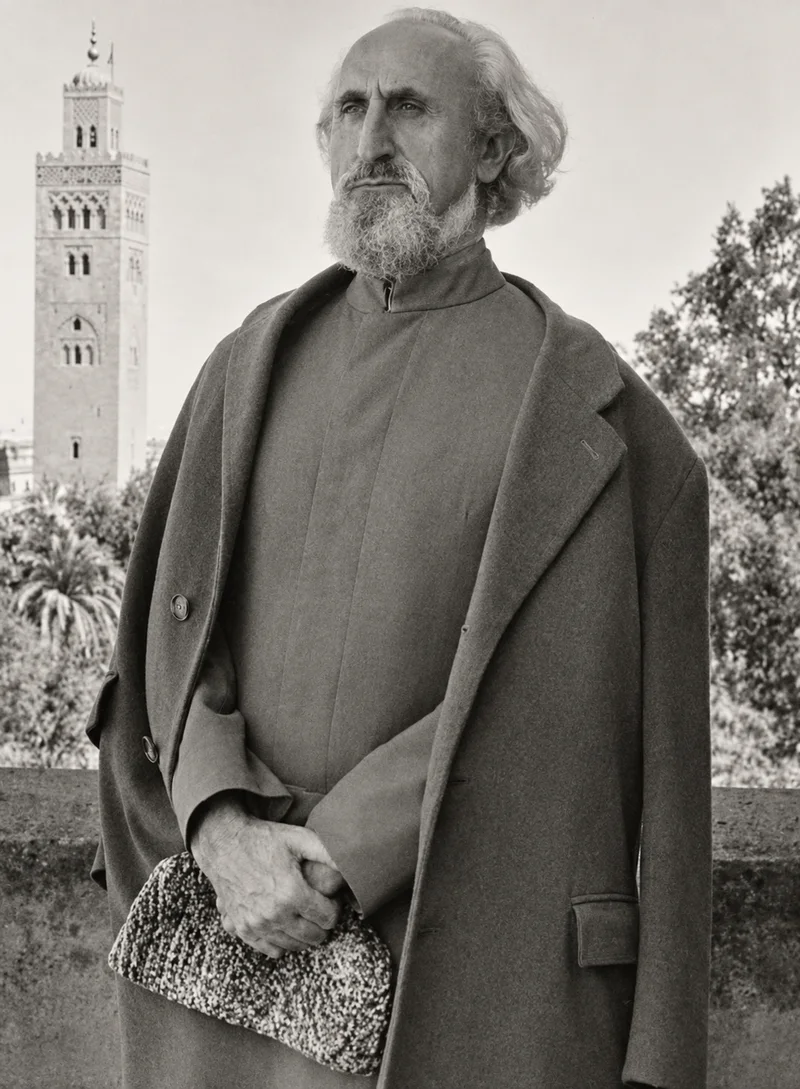
Those who knew him describe him as generous, courageous and firm, yet gentle when the situation called for it; fond of joking with his companions, he spoke only edifying words in his gatherings. Shaykh Mohamed Faouzi is said to have summed up the difference between the two sons of the lineage by saying that Mawlay at-Tahir was distinguished by rigour, and Mawlay al-Hassan by gentleness.
His disciples
He trained many disciples. Among the best known: his father Muhammad al-Fardi; Sidi Muhammad Aghrabi, authorised to open a zawiya in his home town (Bani Mazdui); Sidi as-Sayid, who had previously belonged to the Darqawiyya and joined Mawlay at-Tahir after a foundational dream near the tomb of Ibn Qaddour; and his son Mawlay al-Hassan, who succeeded him.
His death
He died on a Sunday in 1976, while reading surah al-Mulk. His disciple Sidi as-Sayid performed his funeral washing and led the prayer. He was buried in his zawiya, where a mausoleum was built and remains a place of visit today.