1994 – 2004 · from the Rif to the Sahara, alone, with no goal or destination
In May 1994, at nineteen, Shaykh Mohamed Faouzi Al Karkari left the Rif, fleeing a life that had become too heavy. For ten years he crossed Morocco alone and on foot, living on what God gave him, with no goal or destination whatsoever. This page tells the story of that walk.
Leaving the Rif, May 1994
Mohamed Faouzi Al Karkari was born in July 1974 in the Rif, in northern Morocco. In May 1994, at the age of nineteen, he left his native region.
He did not leave with a plan. He left because he could bear no more: the hardships, injustices and great difficulties that had marked his youth had plunged him into deep distress and despair. He had tried to take his own life, without succeeding. Unable to go on living where he was, he decided to flee his life by leaving the place where he had grown up.
He headed for Fez. He had nothing: no money, no place to go, no plan.
Fez: a year on cardboard
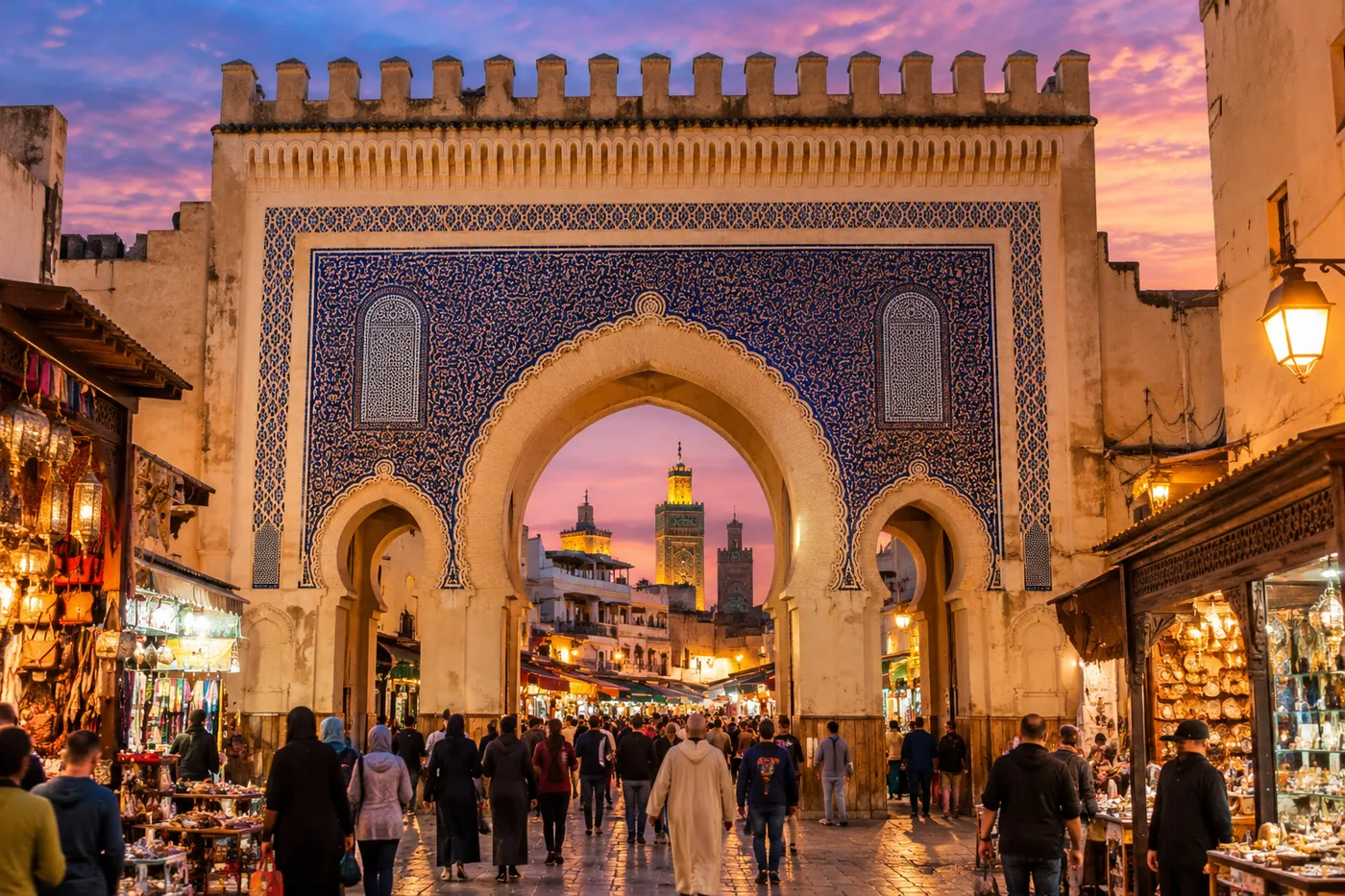
In Fez, the young man was a vagrant. At night he slept on cardboard near Bab Boujloud. By day he went to the busy districts and tourist areas, selling tissues on the street to earn a few dirhams and be able to eat.
He stayed in Fez like this for a year.
Fez, Oujda, Nador: the first journeys back and forth
After that year, he left Fez on foot. He walked to Oujda, then to Nador, before returning to Fez. He stayed there for a while, then set off again for Oujda.
These journeys had no purpose: he walked, stopped wherever he could survive, then moved on again.
1997: leaving Oujda, a road taken at random
In 1997 he was twenty-three. He had been in Oujda for several months and had walked all around it. Once again a harsh inner constriction gripped him, and he decided to leave in search of relief elsewhere. He left the city in total despair.
He had no aim, no destination, no objective. He took a road at random, and that road led him through one town and village after another across eastern and central Morocco: Taourirt, Guercif, Taza, Fez, all the villages around, Meknes, then Sidi Slimane and Kenitra. From there he followed the Atlantic coast, through Mehdia, as far as Salé.
The journey took him two years. He entered Salé in July 1999, while Morocco was in mourning after the death of King Hassan II.
Rabat-Salé: the cave by the sea
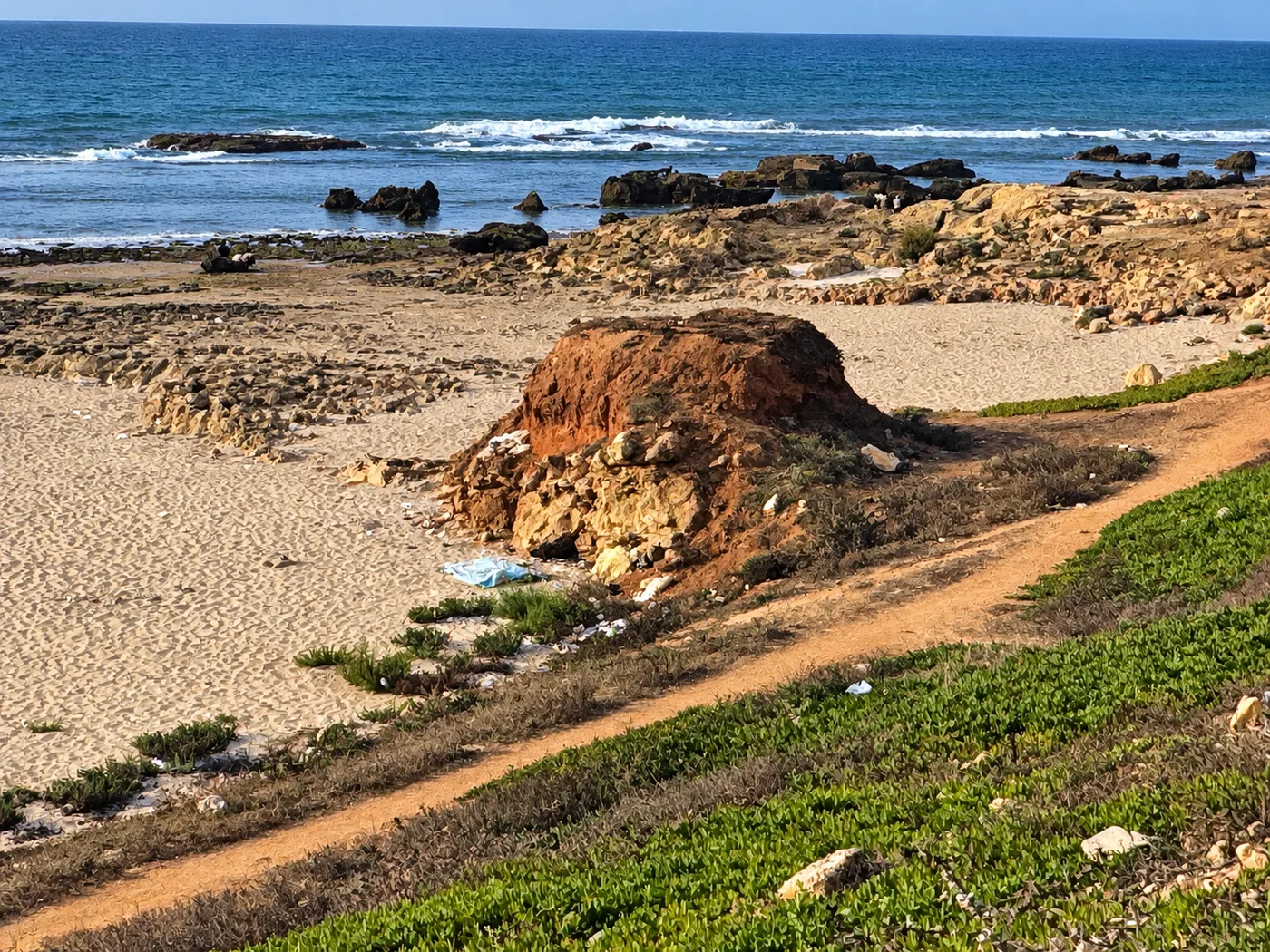
He stayed a few months in Rabat and Salé. On the beach he found a small cave and made it his home. Facing it stood a rock that the sea covered at high tide: he left his belongings there during the day.
By day he went off to work wherever he could earn a living. In the evening he tried to be back before the tide rose, so as to sleep in peace on this islet, completely surrounded by water.
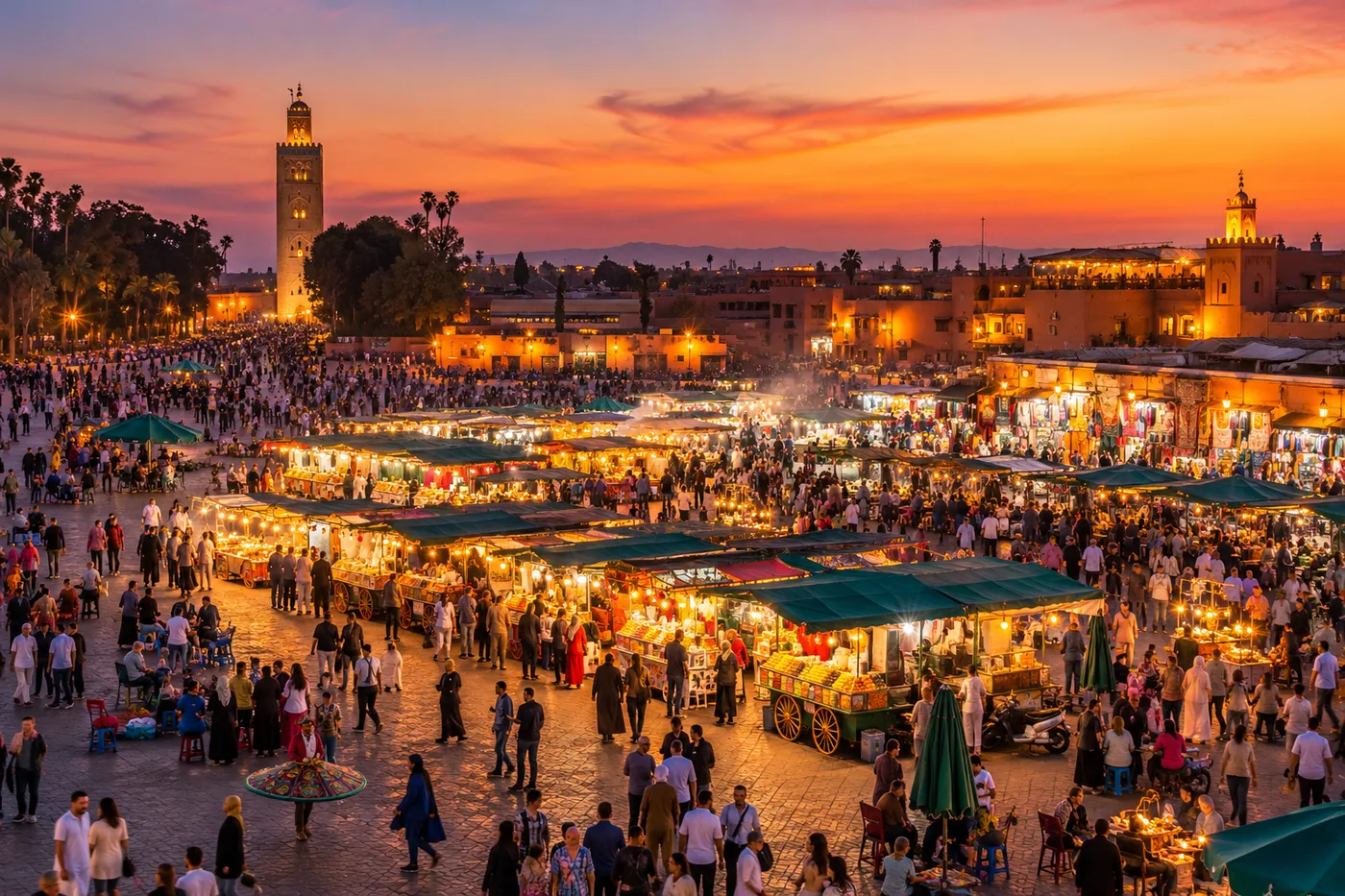
Marrakech: Jemaa el-Fna square (early 2000)
He returned to Fez, then set off on foot for Marrakech across the Middle Atlas: Moulay Bouazza, El Hajeb, Beni Mellal, Fquih Ben Salah, Khenifra, Bouya Omar, until he reached Marrakech around January 2000.
He stayed there about four months, on Jemaa el-Fna square. At night he slept on cardboard. By day he carried a box of small items, lollipops among them, which he tried to sell to tourists to earn a little money.
Some days he sold nothing and had not a single dirham. Then he had to knock on people's doors and search through bins. Sometimes he went three days without eating, and hunger drove him at times to eat tree leaves.
Agadir, across the Atlas (summer 2000)
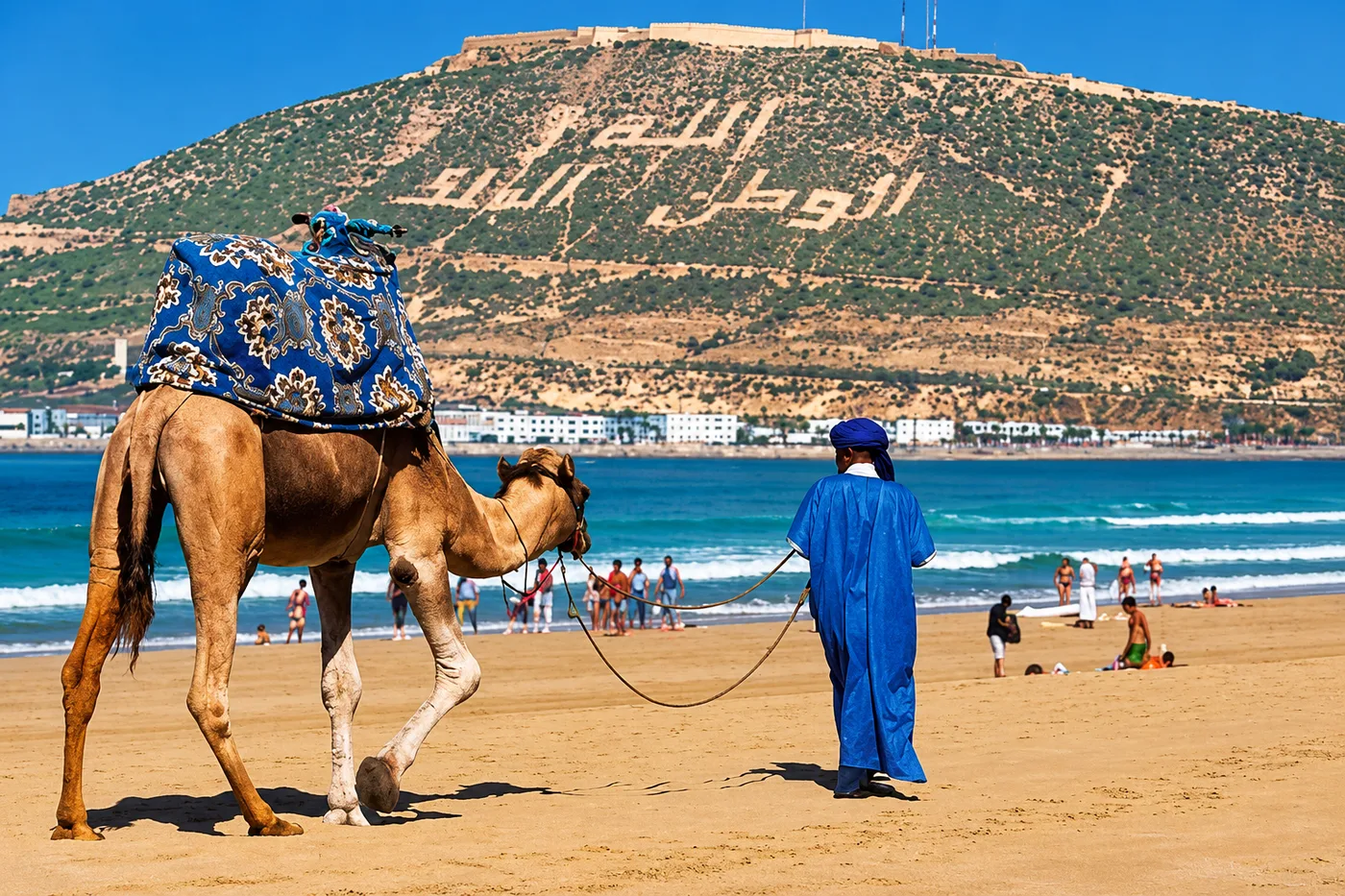
Around May 2000 he left Marrakech for Agadir. He crossed the High Atlas through Chichaoua and Imintanout, a very difficult passage on foot. He reached Agadir for the summer of 2000 and spent the season there.
South: Guelmim, Assa-Zag and Al Mahbes
Then exhaustion and despair returned, and life became unbearable once more. He needed a change of air, and he set off to the south. Again he did not know where he was going. He took a road at random and followed it.
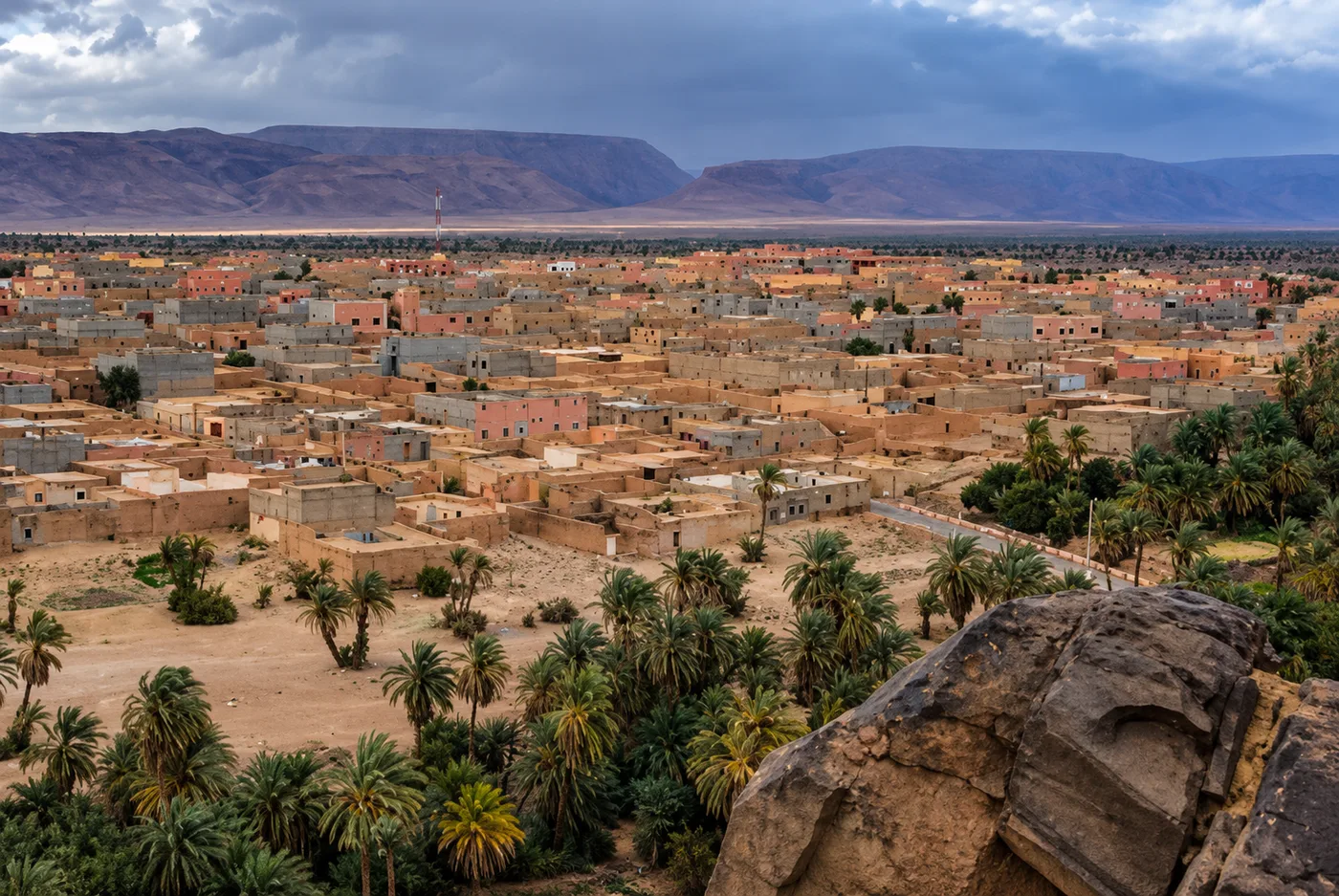
It was the road leading to the Sahara. He did not know. He walked to Guelmim, then to the Saharan town of Assa-Zag, and on to the border post of Al Mahbes.
There he met soldiers from his own home region, that of Taza. For a few months he lived with them, in their barracks.
2001: the tour of the 44 saints
He then set off again, went back to Marrakech, more precisely to Imintanout, and from early 2001 until the end of the year he made what is known as the daour (“the tour”) of the 44 saints.
In Morocco, a moussem is the great annual gathering held around the tomb of a saint: for a few days, crowds come from the whole region, with markets, shared meals, gatherings and invocations. Each saint has his own moussem, on his own date. The daour consists of following these gatherings one after another, from town to town: Marrakech, Fez, Rabat, El Jadida and many others.
He stayed a few days at each moussem. He worked a little, sometimes in cafés, and when he found nothing he sold goods on the street to get by. He kept up this tour for a year, until the end of 2001.
Back in Rabat (2001-2004)
At the end of 2001 he returned to Rabat. He worked there: as a security guard in warehouses, and in cafés and restaurants.
2004: coming home
In 2004, homesickness took hold of him. For ten years he had had no news of his family and did not even know whether his parents were still alive: at the time there were no telephones, and no easy way of getting news.
He finally wanted to know how they were, and he called his mother. She asked him to come back. He returned to his family, ten years after leaving the Rif.
No goal, no destination
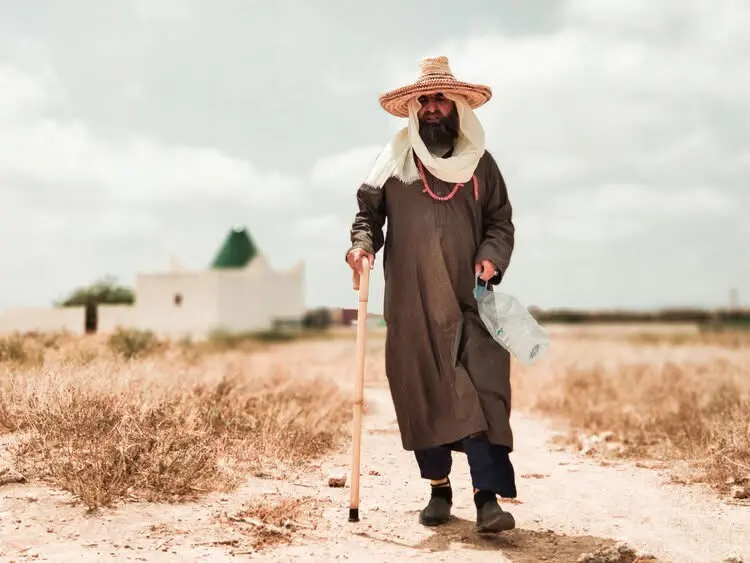
For ten years, this walk had no fixed purpose: neither a study trip nor a pilgrimage to a particular place. Each day he went where the road led him, living on what God gave him.
Siyaha, a Sufi tradition
In the Sufi tradition, this form of pious wandering is called siyaha. It rests on several verses of the Qur'an that invite believers to “journey in the land” (for example surah 29, verse 20) and has been practised by many masters over the centuries.
What followed is told in detail in a book to be published soon by Les 7 Lectures.
Walking as a Spiritual Practice
The Shaykh speaks about it himself, in 2023, at the University of Chicago.
University of Chicago · United States — 23 July 2023
Walking as a Spiritual Practice
In this video project sponsored by the Marty Center, Professor Yousef Casewit interviews the Shaykh on Sufi wandering (siyaha): a practice rooted in the Qur'anic command to “journey in the land”, and shaped by his decade of walking across Morocco.